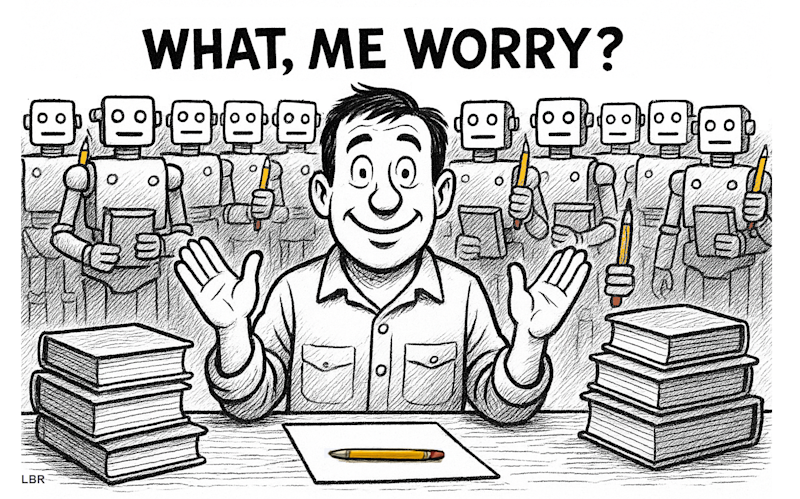
The recent backlash against artificial intelligence, often dismissed with the term 'AI slop,' is emerging as a significant risk for enterprises worldwide. This skepticism, largely driven by surface-level critiques rather than an understanding of AI's underlying capabilities, presents a potential threat to companies and their workforce strategies.
AI's transformative potential is undeniable; however, the current narrative, which suggests that AI advancements have plateaued, obscures the reality of ongoing capability gains. While some influencers argue that the AI boom is merely a tech bubble, evidence points to the contrary. According to recent reports, 20% of organizations already derive value from generative AI, with 85% having increased their AI investment in 2025, and 91% planning further increases in 2026. These statistics underscore AI's growing role in business operations and its impact on employment.
The misconception that AI's progress has stalled could lead companies to underinvest in AI, missing out on its potential to enhance productivity and innovation. Moreover, as AI systems become more capable of performing cognitive tasks more efficiently than humans, the impact on various job sectors is profound. For instance, roles requiring creativity and emotional intelligence, once thought immune to automation, are increasingly susceptible. AI's ability to generate creative content and analyze emotional cues faster than humans challenges traditional notions of job security in these fields.
Indeed, the notion that AI cannot replicate human creativity is being reevaluated. AI models, capable of producing creative work with remarkable originality and usefulness, threaten to reshape creative industries. The same applies to emotional intelligence, where AI's ability to read and predict human emotions could redefine roles in customer service, marketing, and management.
Meanwhile, the broader employment trends indicate a shift in skill requirements, emphasizing adaptability and AI literacy. As AI continues to evolve, the workforce must also transition, embracing lifelong learning to stay relevant in an AI-driven economy. Companies must strategize to harness AI's full potential, balancing automation with human talent development.
Looking forward, the next 12 to 24 months will be critical for workers as AI continues to advance. Employees will need to enhance their skills to complement AI technologies, while organizations must foster environments that support this transition. Failure to do so could result in significant competitive disadvantages in the global market.
Ultimately, acknowledging AI's advancements rather than dismissing them as 'slop' is crucial for enterprises aiming to navigate the future of work. Such recognition is not only necessary for leveraging AI's benefits but also for safeguarding employment in an increasingly automated world.
Originally reported by VentureBeat