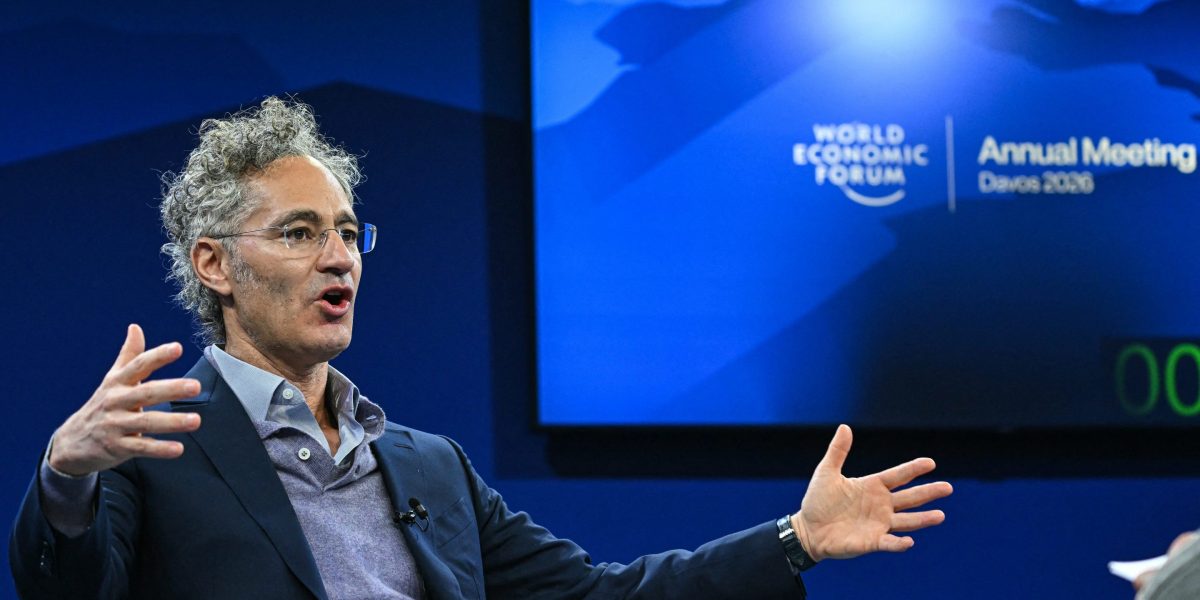
In a world where artificial intelligence continues to redefine the boundaries of work, Palantir CEO Alex Karp's stark warning at the World Economic Forum in Davos has sparked significant debate. "It will destroy humanities jobs," Karp declared, suggesting that the future belongs to those with specific vocational skills rather than traditional humanities degrees.
The implications of Karp's statement are profound, particularly in the context of a labor market struggling to reconcile technological advancements with employment needs. As AI systems become more capable of handling complex tasks, the demand for roles requiring critical thinking and creativity—often associated with humanities—appears to be under threat. This shift underscores a growing need for workers to possess specialized skills that can complement AI, rather than be replaced by it.
Karp's perspective is not universally shared. While he advocates for vocational training, emphasizing its potential to fill the widening skills gap, others, such as BlackRock COO Robert Goldstein, see a continued value in humanities education. Goldstein, for instance, has highlighted the importance of recruiting individuals with diverse academic backgrounds to foster creativity and innovation within his company. Similarly, McKinsey CEO Bob Sternfels has underscored the potential of liberal arts majors to break through AI's linear problem-solving approaches.
Nevertheless, the shift towards prioritizing vocational training over traditional academic pathways is gaining momentum. Palantir's Meritocracy Fellowship, which offers high school students internships with a potential full-time position, exemplifies this trend. This initiative reflects a broader critique of American universities for prioritizing elitism over practical skills, a sentiment echoed by Karp, who argues for alternative methods of assessing aptitude.
Indeed, the labor market is witnessing a transformation. The unemployment rate for young workers has risen, particularly among college graduates, indicating a misalignment between educational outputs and market demands. As AI continues to evolve, the need for specialized skills becomes more pronounced, suggesting a future where vocational training could be key to economic resilience.
Looking ahead, the next 12 to 24 months will be critical for workers navigating this changing landscape. As companies increasingly seek candidates with skills that AI cannot easily replicate, vocational training programs may offer a viable path to employment security. The challenge lies in adapting educational systems to meet these new demands, ensuring that the workforce is equipped to thrive in an AI-driven world.
In conclusion, while AI may pose a threat to certain job sectors, it also presents opportunities for those willing to adapt. As Karp's comments highlight, the future of work will likely favor those who can develop specialized skills, a shift that could redefine educational priorities and economic strategies in the years to come.
Originally reported by Fortune.