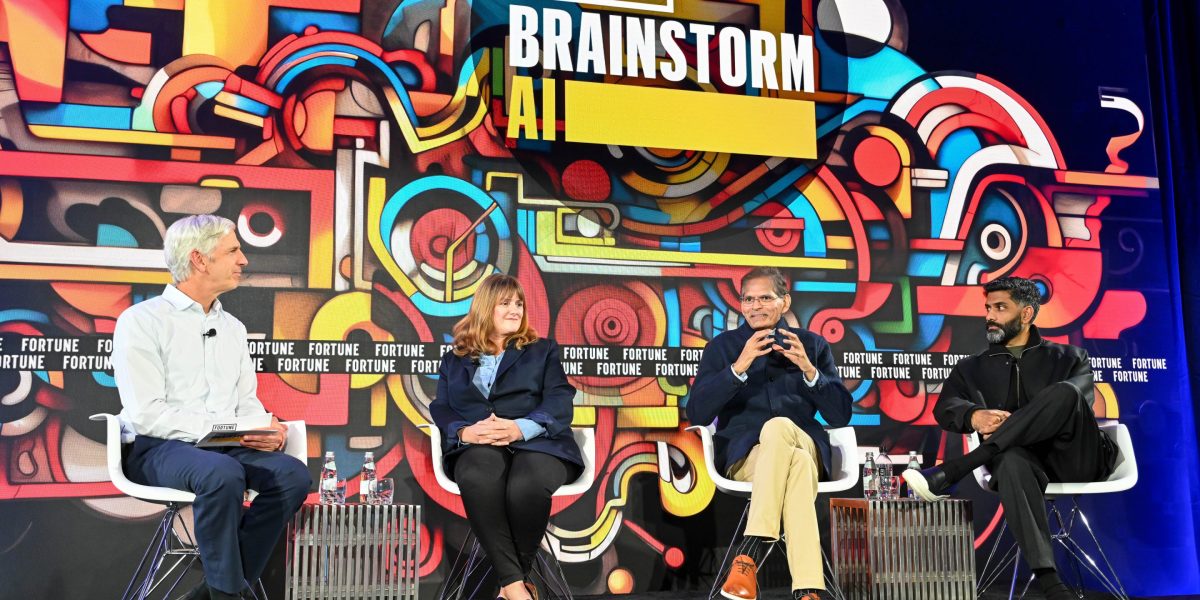
The Fortune Brainstorm AI conference in San Francisco comes at a pivotal moment for the artificial intelligence sector, as key players such as Databricks and OpenAI set ambitious new benchmarks that could redefine workforce dynamics across industries.
Recent developments underscore the transformative potential of AI, particularly in the technology sector. Reports that Databricks is engaged in discussions to secure a valuation of $134 billion highlight the meteoric rise of AI-driven companies. Simultaneously, Anthropic's contemplation of an IPO and Cursor's valuation surge to over $29 billion signal a robust market appetite for AI innovation.
These valuations not only reflect investor confidence but also suggest significant implications for employment within and beyond the tech industry. As AI technologies become increasingly integrated into business operations, they necessitate a re-evaluation of existing job roles, with a focus on skills that complement these advancements. Companies are likely to prioritize roles that involve AI management, data analysis, and enhanced cybersecurity measures.
Moreover, as AI firms like OpenAI, led by COO Brad Lightcap, and other tech giants convene at the Brainstorm AI event, the discourse will likely center on the strategic deployment of AI technologies. This includes addressing the ethical and regulatory considerations that accompany such rapid technological growth. The presence of industry leaders, including Ali Ghodsi of Databricks and Thomas Kurian of Google Cloud, underscores the importance of collaborative efforts in shaping AI's future trajectory.
Indeed, the emphasis on AI in San Francisco this week is emblematic of a broader trend wherein industries are compelled to adapt to the digital transformation. The conference provides a platform for exploring how AI can drive efficiency and innovation, ultimately influencing job creation and transformation across sectors ranging from healthcare to manufacturing.
Looking ahead, the next 12 to 24 months are poised to be a period of significant transition for the workforce. As AI technologies mature and become more entrenched in everyday operations, workers will need to develop new competencies to remain competitive. Upskilling and reskilling initiatives will be critical in ensuring that employees can thrive in an increasingly automated environment.
In conclusion, the convergence of AI leaders in San Francisco serves as a microcosm of the broader shifts underway in the global workforce. As companies like Databricks and OpenAI push the boundaries of what is possible, the implications for employment are profound, necessitating a proactive approach to workforce development and strategic planning.
Originally reported by Fortune.