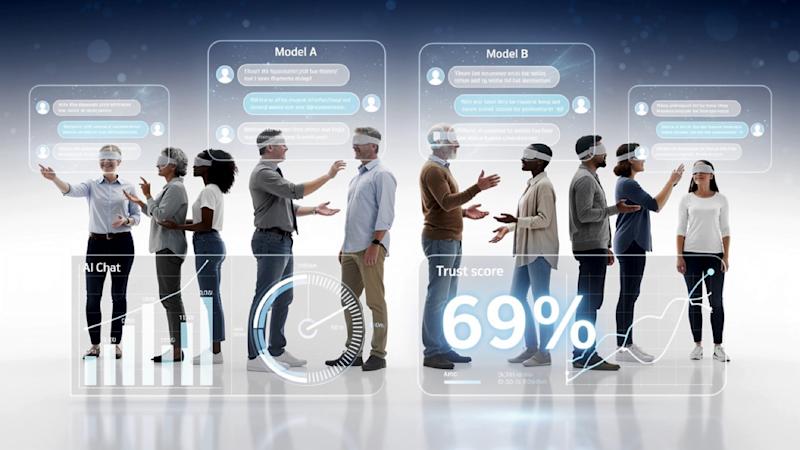
Gemini 3 Pro's recent achievement in trust evaluations marks a pivotal moment in artificial intelligence development, demonstrating a significant leap from its predecessor, Gemini 2.5. This improvement, noted in blinded testing where trust surged from 16% to 69%, showcases a shift towards real-world applicability over academic benchmarks.
The implications for employment are profound. As AI systems like Gemini 3 become more trusted by diverse user demographics, their deployment in various industries is likely to accelerate. This trust is not merely technical; it reflects a nuanced understanding of user needs, adaptability, and communication style, which are crucial for AI integration into human-centric workflows.
Moreover, the methodology employed by Prolific, involving diverse demographic sampling, highlights a critical aspect: the adaptability of AI across different user groups. This is particularly relevant for enterprises looking to deploy AI across global and culturally diverse workforces. The ability of a model to perform consistently well across various demographics suggests a broader applicability in customer service, healthcare, and beyond.
Indeed, the improvement in trust scores underscores the importance of human data in evaluating AI systems. While technical performance remains critical, the real measure of success is how well these systems are received by their users. This user trust, as demonstrated by Gemini 3's performance, could lead to broader acceptance and integration of AI in sectors traditionally resistant to automation.
The forward-looking impact on employment is significant. As AI systems like Gemini 3 are increasingly adopted, roles within industries may transform, requiring more nuanced human interaction skills alongside technical proficiency. Employees will need to adapt to working alongside AI, leveraging these systems to enhance productivity and deliver better outcomes.
In the next 12 to 24 months, we can expect a continued focus on developing AI systems that prioritize user trust and adaptability. This trend will likely spur new training programs aimed at equipping the workforce with skills to manage and collaborate with AI technologies.
Ultimately, the evolution of AI models such as Gemini 3 towards greater user trust and adaptability heralds a transformative period for employment. As these technologies integrate deeper into the fabric of work, the balance between human skills and machine efficiency will define the future of many industries.
Originally reported by VentureBeat.