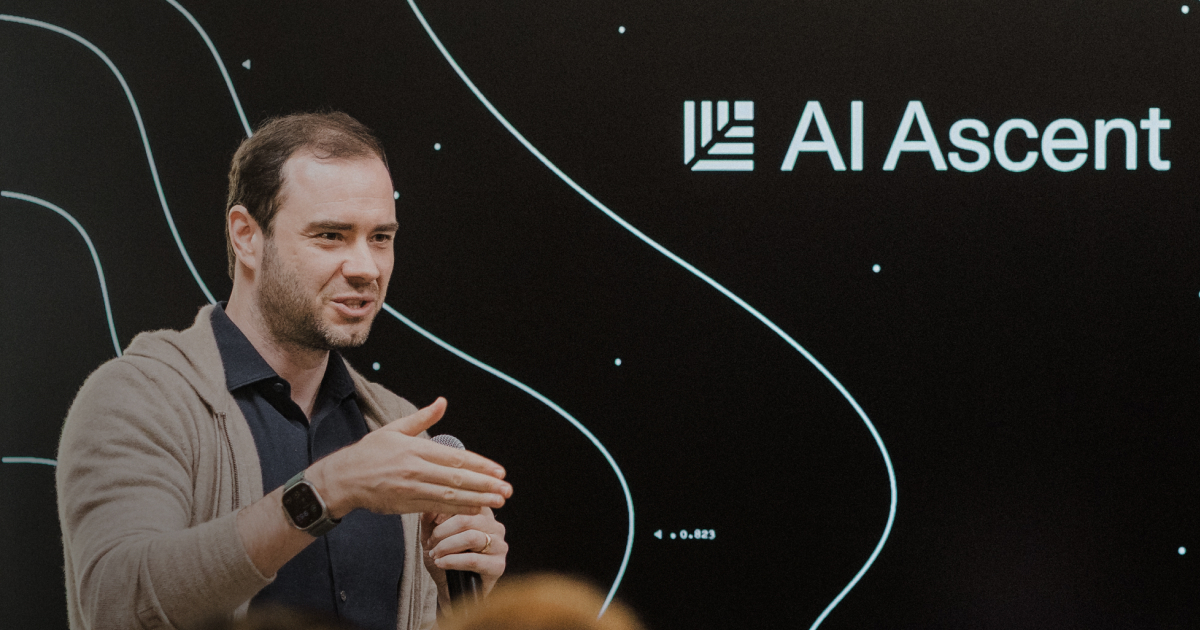
In a world increasingly defined by the rapid evolution of artificial intelligence, Sequoia's AI Ascent 2026 event has marked a pivotal moment in the discourse surrounding technological advancement and its impact on the workforce.
The significance of this gathering, held in San Francisco, lies not merely in its assembly of AI luminaries such as Demis Hassabis and Andrej Karpathy, but in its bold declaration that AI is reshaping the workforce landscape. Pat Grady of Sequoia encapsulated this shift by comparing AI's impact to the leap from horse-drawn carriages to automobiles. This metaphor underscores the transformative potential of AI, which promises not just incremental improvements, but a fundamental rethinking of cognitive labor.
The implications for employment are profound. As Sonya Huang articulated during the event, 2026 is the year when AI agents become central to business operations. These agents, powered by advanced models, tools, and harnesses, are set to redefine roles across industries. Konstantine Buhler further emphasized that this cognitive revolution will mirror, if not dwarf, the Industrial Revolution's impact on manual labor. This suggests a future where the very nature of work is redefined, with cognitive tasks increasingly automated.
Moreover, the discussions highlighted at AI Ascent 2026 reflect broader trends in the labor market. As AI models become more sophisticated, the demand for traditional cognitive roles may diminish, even as new opportunities in AI development and maintenance emerge. The event's focus on data efficiency and neural network advancements suggests a future where jobs are not only about managing these systems but optimizing and innovating within them.
Indeed, as companies like Anthropic and others push the frontier of AI, they are inadvertently crafting a new economic paradigm. This paradigm will likely necessitate a workforce that is adaptable, equipped with skills in AI management, and capable of navigating a landscape where cognitive tasks are increasingly outsourced to machines.
In the next 12-24 months, workers will need to pivot towards roles that leverage AI technology, focusing on areas like AI ethics, data management, and human-machine collaboration. This shift will require reskilling and a reimagining of career paths, as traditional roles evolve or become obsolete.
In conclusion, Sequoia’s AI Ascent 2026 paints a picture of a future where the workforce is transformed by AI. This transformation, while fraught with challenges, also promises new opportunities for those ready to embrace change. The echoes of Pat Grady's opening remarks will resonate for years to come, as businesses and individuals alike grapple with the realities of an AI-driven world.
Originally reported by sequoiacap.com