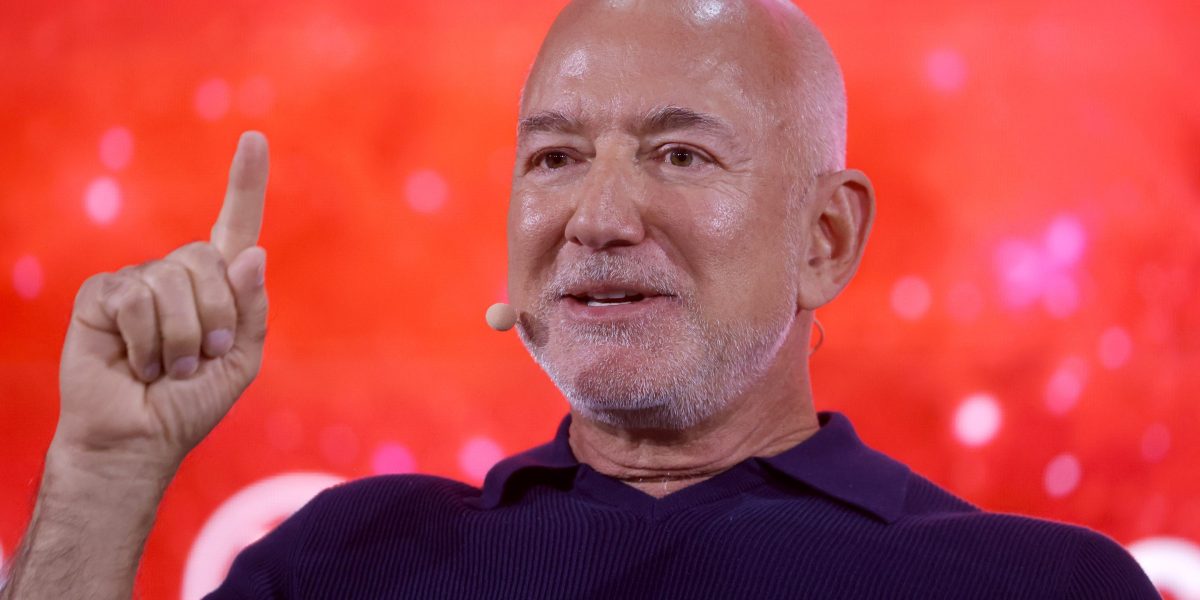
The prospect of a drastically shortened workweek, driven by advances in artificial intelligence (AI), is not merely a futurist's dream but a tangible reality, according to Amazon founder Jeff Bezos. His assertions underscore a pivotal shift in the labor market, where AI-driven productivity could redefine employment paradigms.
Bezos' predictions, shared in a recent interview with Fox News, highlight the potential for AI to transform economic productivity, allowing individuals to support themselves with fewer working hours. This vision challenges traditional concepts of labor, suggesting that the abundance of wealth and resources in the AI era might lead to a labor shortage as families transition back to single-income households.
In contrast to other tech luminaries like Anthropic CEO Dario Amodei and OpenAI's leadership, who caution about the risks of AI, Bezos paints a picture of prosperity. "Some people will decide, I can support my family working three days a week. That’s what productivity in the economy means," he noted. The implication is profound: as productivity increases, the necessity for dual-income households diminishes, giving rise to a more flexible workforce.
Nevertheless, the transition is unlikely to be seamless. The tension between AI’s promise and the uncertainty it brings to the labor market is palpable. Amazon's own restructuring, which saw a reduction of about 30,000 corporate roles, exemplifies this dichotomy. As companies invest heavily in AI—Amazon plans over $200 billion in capital expenditures, largely on data centers—their workforce strategies evolve, often at the expense of traditional job roles.
Moreover, Bezos acknowledges the challenges for investors as they navigate this new economic landscape. While the AI boom presents opportunities, discernment is key, as not all ventures will yield success. This sentiment resonates across the tech industry, where leaders like Nvidia’s Jensen Huang and JPMorgan’s Jamie Dimon offer varied forecasts on the extent of AI’s impact on the workweek, ranging from reducing it to four days to potentially making work optional.
In the coming 12 to 24 months, workers may face a landscape of both opportunity and uncertainty. The potential for AI to create a more leisurely workweek is tantalizing, but the path requires careful navigation. Companies must balance innovation with workforce stability, ensuring that the gains in productivity do not come at the expense of employment security.
As the AI narrative unfolds, its impact on employment will be closely watched, offering both promise and caution. The reshaped workweek envisioned by Bezos and others could herald a new era of economic flexibility, but it also calls for a rethinking of societal norms around work and leisure.
Originally reported by Fortune.