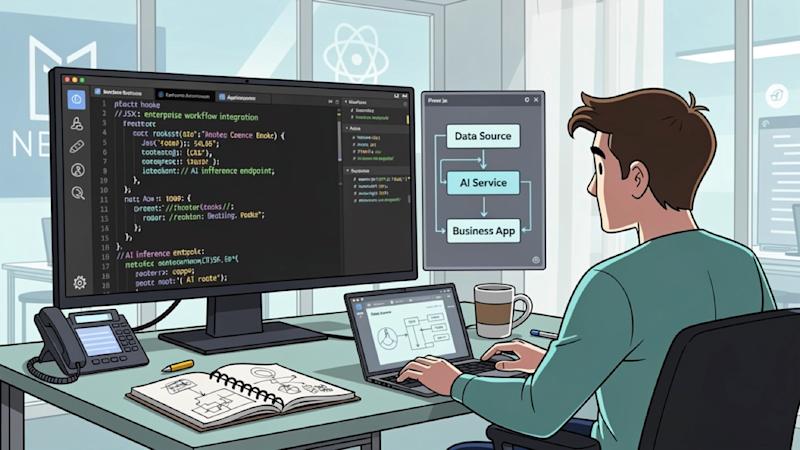
Vercel's recent overhaul of its v0 platform marks a significant shift in the landscape of software development, with profound implications for the workforce involved in this field. As AI-generated code becomes increasingly integrated with existing production infrastructures, the roles and responsibilities of developers are poised for transformation.
This development is crucial at a time when businesses are under pressure to innovate rapidly while managing existing systems. Vercel's new v0 enables AI-generated prototypes to be seamlessly transitioned into production environments. This advancement could redefine how developers operate, shifting their focus from routine coding tasks to more strategic roles in software design and deployment.
Indeed, the platform now imports existing GitHub repositories, automatically aligns with enterprise infrastructures, and enforces security protocols. This automation of mundane tasks means that developers can dedicate more time to advanced problem-solving and innovation. Moreover, with built-in support for tools like VS Code, developers can work more efficiently, enhancing productivity across teams. The traditional boundaries between roles, such as product managers and marketers, also blur as they can now directly contribute to production code without relying on engineers.
Meanwhile, Vercel's integration with platforms such as Snowflake and AWS signifies a move towards more holistic software development processes. By enabling seamless connections to production data sources, the platform reduces the need for manual intervention, allowing developers to focus on optimizing and refining AI-generated code. This shift could lead to the emergence of new roles focused on managing these integrations and ensuring data security.
According to the announcement, the platform's emphasis on AI-driven workflows is emblematic of a broader trend towards automation in software development. As AI tools like Claude Code become more sophisticated, the potential for them to handle backend logic and script generation without human intervention grows. This trend could lead to a redefinition of what it means to be a software developer, with an increasing focus on oversight and strategic direction rather than direct code writing.
Looking forward, the next 12 to 24 months may see a reconfiguration of skill sets within software development teams. As AI tools become more entrenched, professionals will need to adapt, acquiring skills that align with the oversight and direction of AI-generated code. This evolution may also open up new opportunities for those entering the field, as the demand for individuals capable of managing AI-driven processes rises.
In conclusion, Vercel's v0 transformation underscores a pivotal moment in software development, heralding a future where AI plays a central role in production code deployment. As developers adapt to these changes, their roles will inevitably transform, requiring a blend of traditional skills and new competencies.
Originally reported by VentureBeat.