The rise of artificial intelligence as a cognitive assistant is reshaping how we process information, raising crucial questions about autonomy and decision-making.
In an era where AI technologies are increasingly influencing both trivial and complex tasks, the implications for employment and personal agency are profound. As AI systems like Google Deep Research and OpenAI's tools assume tasks traditionally requiring human analysis, the boundaries of human cognitive effort are being redrawn.
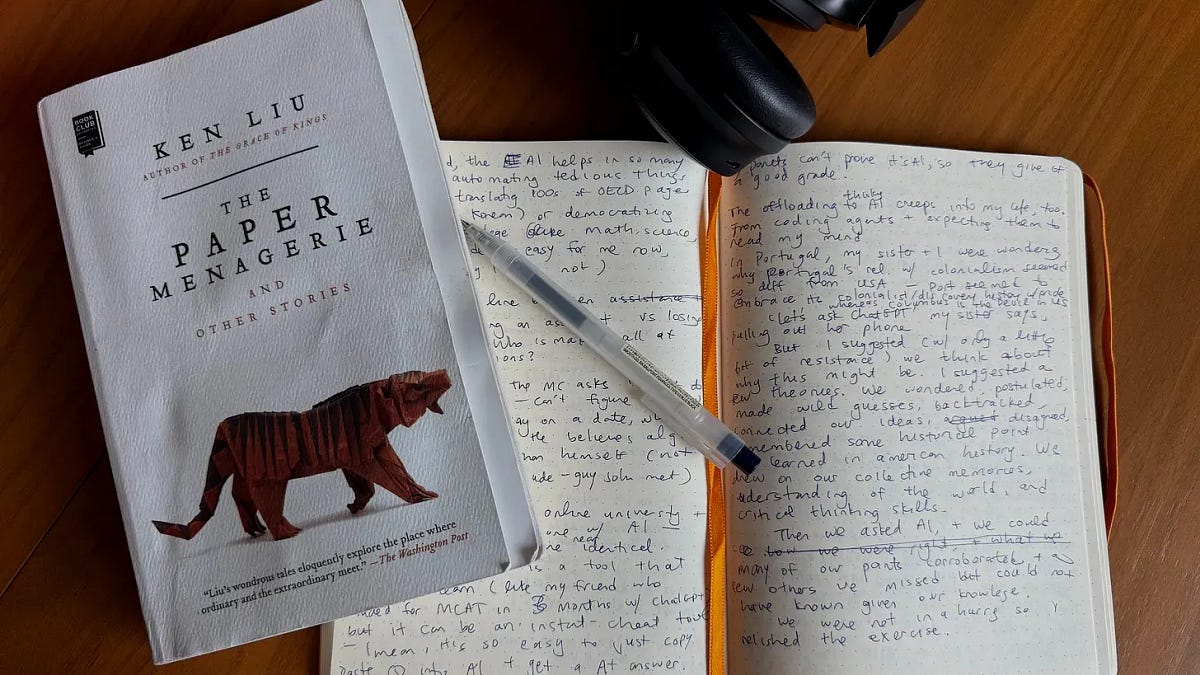
The phenomenon of cognitive offloading to AI, as illustrated by the fictional Tilly in Ken Liu's story, mirrors real-world practices where individuals defer decision-making to digital assistants. This trend is not just a cultural curiosity but a significant shift in labor dynamics. When individuals rely on AI to perform tasks ranging from choosing breakfast to making career decisions, the role of human judgment diminishes, potentially affecting jobs that depend on human intuition and critical thinking.
Moreover, the narrative of the "Microphone Man," who uses AI to analyze daily interactions, underscores a broader movement toward automation in professional environments. This shift has implications for sectors reliant on human-centric skills, such as consulting and management, where AI's analytical capabilities could supplant traditional roles. The potential for AI to replace human engineers by automating input and operation processes exemplifies the risk of job displacement in technical fields.
Nevertheless, it is essential to recognize the efficiencies AI brings to the table. By streamlining research and analysis, AI can enhance productivity and free up human resources for strategic initiatives. Indeed, tools that once required hours of human labor can now deliver results in minutes, altering the landscape of time-intensive professions like research and development.
Despite these benefits, the challenge remains in maintaining a balance between AI assistance and human autonomy. As AI continues to evolve, the workforce will need to adapt, prioritizing skills that complement rather than compete with AI capabilities. This transition period will be critical, as workers must not only coexist with AI but also leverage its strengths to enhance their roles.
Looking ahead, the integration of AI into everyday decision-making processes will require a reevaluation of skill sets across industries. Over the next 12 to 24 months, workers will need to cultivate skills that emphasize creativity, emotional intelligence, and strategic oversight to remain relevant in an AI-augmented world.
In conclusion, while AI offers remarkable potential to enhance efficiency, its role in cognitive offloading presents both opportunities and challenges for the workforce. As we navigate this landscape, the focus must remain on preserving human autonomy and ensuring that AI serves as a tool for empowerment rather than a substitute for human judgment.
Originally reported by Yennie Jun.