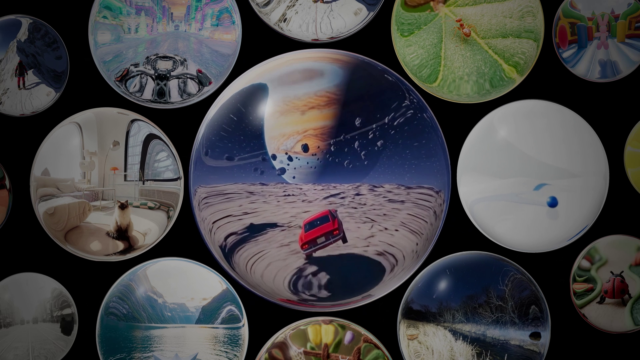
Google's latest innovation, Project Genie, introduces a groundbreaking capability: creating interactive virtual worlds from a simple photo or prompt. This technological advancement is poised to reshape creative industries by offering novel tools for digital content creation.
The implications of Project Genie for employment, particularly in creative and digital sectors, are profound. As companies increasingly embrace AI for content generation, roles within these industries may transform significantly. For digital artists, game developers, and virtual environment designers, the ability to rapidly generate dynamic virtual worlds signifies both an opportunity and a challenge, as they must adapt to new tools and methodologies.
Project Genie builds on Google's previous version, Genie 3, by integrating advanced AI models like Nano Banana Pro and Gemini 3. This enhancement allows users to 'sketch' worlds from images, creating environments that can be explored interactively. While this could democratize world-building, enabling more individuals to participate in creative processes, it might also pressure traditional roles that rely on manual design and development skills.
Moreover, the technology's capacity to generate different outcomes with each iteration enables continuous reimagining and customization of virtual spaces. This capability not only enriches user experience but also suggests potential shifts in job responsibilities, where creative professionals may transition from creators to curators and managers of AI-generated content. This evolution echoes broader employment trends in automation, where AI supplements human creativity rather than supplants it.
Nevertheless, the experimental nature of Project Genie, as highlighted by Google, indicates that it is still in its research phase. Current limitations, such as input lags and world exploration constraints, suggest that human oversight remains crucial. The ongoing development will likely refine these issues, potentially leading to more seamless integration into professional workflows.
Looking ahead, as Project Genie and similar technologies mature, the next 12 to 24 months could witness a broader acceptance and integration of AI tools within creative sectors. This period may also see a reevaluation of skill sets required for creative roles, with an increased emphasis on AI literacy and adaptability.
In conclusion, while Project Genie presents a bold step forward in AI-driven content creation, the enduring human touch remains essential to guide and enhance these digital experiences. As Google's research progresses, the creative workforce stands on the brink of transformation, with AI acting as both a tool and a collaborator in this new era.
Originally reported by Ars Technica.