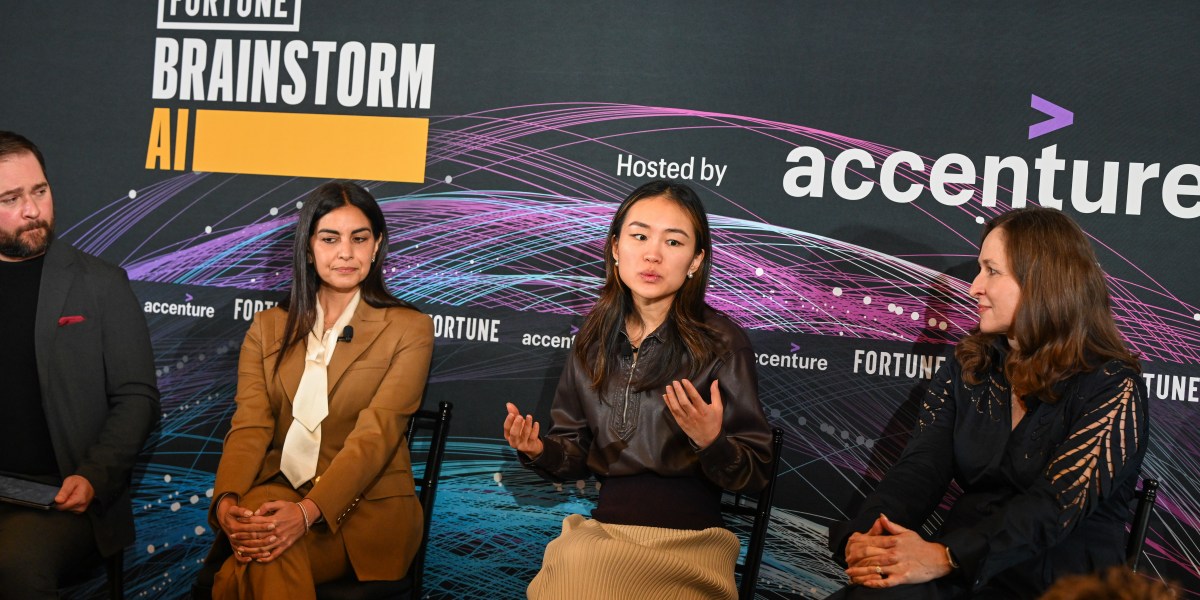
As the world stands on the cusp of an AI-driven transformation, creative workers are poised not for obsolescence but rather for an evolution in their roles. According to insights shared at the Fortune Brainstorm AI conference in San Francisco, industry leaders assert that while AI will not replace creative jobs, it will redefine them, turning today's producers into tomorrow's directors of AI agents.
The significance of this shift cannot be overstated. With AI tools already proving adept at tasks within marketing, customer service, and design, the way creative professionals approach their work is set to fundamentally change. This transformation promises to elevate the workforce, enabling individuals to focus more on strategic direction rather than rote tasks, thus potentially fostering a new era of innovation and productivity.
Nevertheless, this evolution is not without its complexities. As Nancy Xu, vice president of AI and Agentforce at Salesforce, noted, workers will transition from asking, "How do I accomplish the goal?" to pondering, "What are the goals that I want to accomplish, and then how do I delegate those goals to AI?" This shift signifies a profound change in workplace dynamics, where the creative process becomes intertwined with the management of AI-driven capabilities.
Moreover, the example of Rivian utilizing Autodesk's AI-powered tools to expedite its design process by two years illustrates the tangible benefits of AI integration within creative workflows. This efficiency gain underscores a broader economic principle: the potential for AI to raise both the floor and the ceiling of creative possibilities.
Yet, the distribution of AI's benefits across the workforce remains uneven. Xu emphasizes that AI's current impact will likely elevate the performance of those in the lower 50th percentile of their roles, while leaving top performers relatively unaffected. This uneven distribution poses challenges for workforce development, as entry-level tasks may be absorbed by AI, reducing traditional learning opportunities for newcomers.
Looking ahead, the next 12 to 24 months may see organizations grappling with these changes, necessitating a reevaluation of corporate structures and workforce strategies. As Ami Palan of Accenture Song pointed out, even the most advanced AI solutions can become bottlenecked if not supported by a conducive organizational culture.
Ultimately, the transition to AI-augmented roles in creative industries presents both challenges and opportunities. It calls for a reimagining of career paths and a redefinition of what it means to be a creative professional in the modern economy. As the dust settles, the creative workforce will need to adapt, innovate, and redefine its value in an AI-enhanced world.
Originally reported by Fortune.