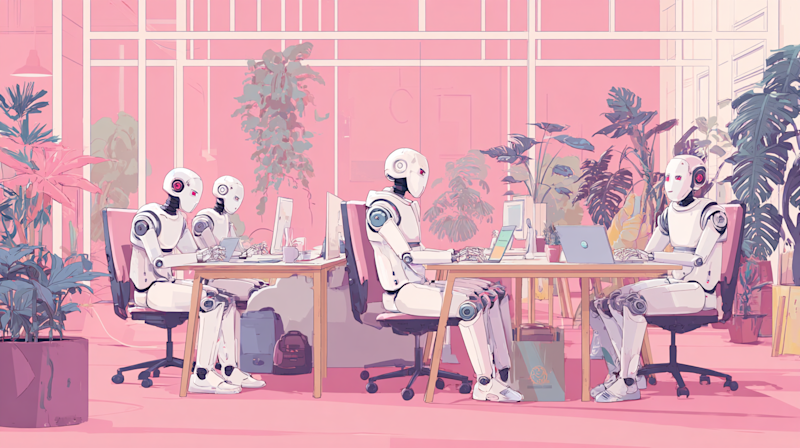
Anthropic's recent expansion of Claude Cowork to a broader user base marks a significant shift in how AI is integrated into workplace collaboration. With its transformation from a simple chat tool into a comprehensive shared AI infrastructure, Claude Cowork is poised to redefine team workflows.
This development is particularly relevant in today's rapidly evolving job landscape, where the integration of AI into everyday tasks is becoming increasingly common. As companies seek to enhance productivity and streamline operations, the ability to utilize AI for non-technical, asynchronous tasks can lead to more efficient and cohesive team environments.
The introduction of Claude Cowork to team and enterprise plans highlights a broader trend of AI tools being repurposed beyond their initial coding-focused design. Indeed, as Anthropic noted, users were already leveraging Claude Code for broader workflows, indicating a natural progression towards more collaborative applications. This evolution is emblematic of a shift in workplace dynamics, where AI is not merely a supplementary tool but an integral part of the collaborative process.
Moreover, the new features added to Claude Cowork, such as the ability to '@-mention' projects and onboard new vendors at scale, underscore its potential as a robust system for managing and executing tasks. This has implications for how teams coordinate and document their work, potentially transforming roles that traditionally relied on manual processes into more dynamic, AI-augmented positions.
Economic theories suggest that such technological advancements may lead to both displacement and transformation within the workforce. While some roles may become obsolete, others will evolve, requiring workers to adapt to AI-integrated workflows. This dual impact is reflected in the uncertainty surrounding ownership and access within Claude Cowork, highlighting ongoing challenges in defining AI's role in workplace continuity.
Looking ahead, as AI continues to permeate various sectors, the demand for skills related to managing and optimizing AI-assisted workflows is likely to grow. Over the next 12 to 24 months, workers will need to navigate these changes, acquiring new competencies and embracing AI as a partner in their professional endeavors.
Ultimately, the expansion of Claude Cowork reflects a broader narrative of transformation in the workplace, where AI is reshaping how teams operate and collaborate. As this technology matures, its impact on employment will become ever more pronounced, shaping the future of work.
Originally reported by VentureBeat.