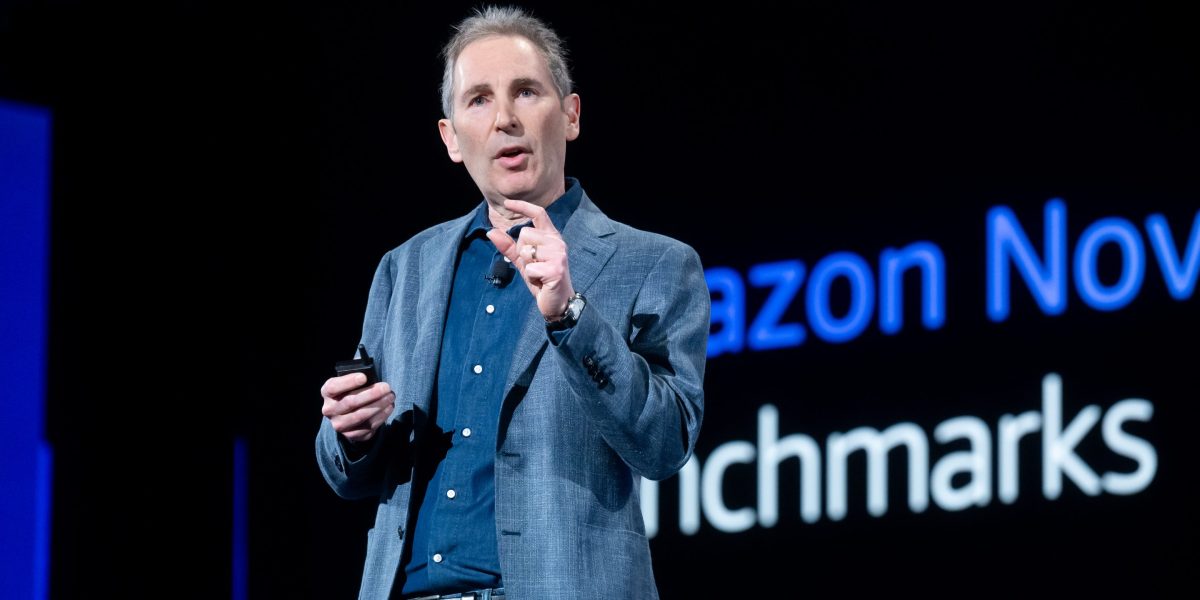
Amazon's recent announcement of laying off 14,000 employees has stirred conversations, not least because CEO Andy Jassy assured that the decision was driven by cultural adjustments rather than immediate financial or AI-related motivations. However, the specter of technological transformation looms large, subtly influencing corporate workforce strategies.
The significance of this development cannot be overstated. In a world increasingly shaped by AI efficiencies, Amazon's move signals a potential shift in how companies align their workforce with evolving technological landscapes. As firms grapple with the dual demands of technological adoption and cultural coherence, the implications for employment structures are profound and immediate.
The layoffs, primarily targeting middle management, came shortly after a memo hinting at AI's role in enhancing operational efficiency. Jassy's remarks during Amazon's quarterly earnings call underscore a strategic pivot towards maintaining a lean and agile organizational structure. "The announcement that we made a few days ago was not really financially driven, and it’s not even really AI-driven, not right now at least," he stated, emphasizing cultural fit over cost-cutting.
Moreover, the broader context of AI's influence on employment patterns is worth examining. As Jerome Powell noted, several corporations have cited AI as a rationale for workforce reductions, a sentiment echoed across the technology, media, and telecommunications sectors, where about a third of companies are reportedly adjusting headcounts in response to AI advancements.
Indeed, Amazon's trajectory since 2019, which saw its workforce nearly double amid pandemic-driven growth, illustrates the challenges of maintaining organizational coherence amidst rapid expansion. As Jassy reflected, rapid growth can inadvertently dilute the ownership and decision-making agility at the frontline, necessitating structural recalibrations.
Nevertheless, the broader employment landscape faces a complex interplay of technological and cultural forces. While Goldman Sachs' recent study suggests that only a minority of corporate clients are actively reducing staff due to AI, the pressure to remain competitive in an AI-enhanced marketplace remains potent.
Looking ahead, the next 12 to 24 months may witness an acceleration in workforce transformations as companies like Amazon strive to balance technological integration with cultural integrity. The challenge lies in navigating these waters without compromising the agility and speed that modern business environments demand.
In closing, Amazon's workforce strategy, ostensibly about culture, reveals deeper undercurrents of technological influence, reflecting broader trends in corporate employment strategies as AI continues to redefine the parameters of operational efficiency.
Originally reported by Fortune.