In the bustling corridors of Amazon, a silent revolution is underway, one that could reshape the way financial compliance is managed globally. By harnessing the power of generative AI, Amazon Finance Technology teams are not just streamlining regulatory inquiries but setting a blueprint for the future of compliance.
The stakes in this transformation are high. As global financial regulations grow increasingly complex, the need for efficient, scalable solutions has never been more critical. For companies like Amazon, which operate across multiple jurisdictions, managing regulatory inquiries is not just about compliance but also about maintaining operational efficiency in a rapidly evolving business landscape.
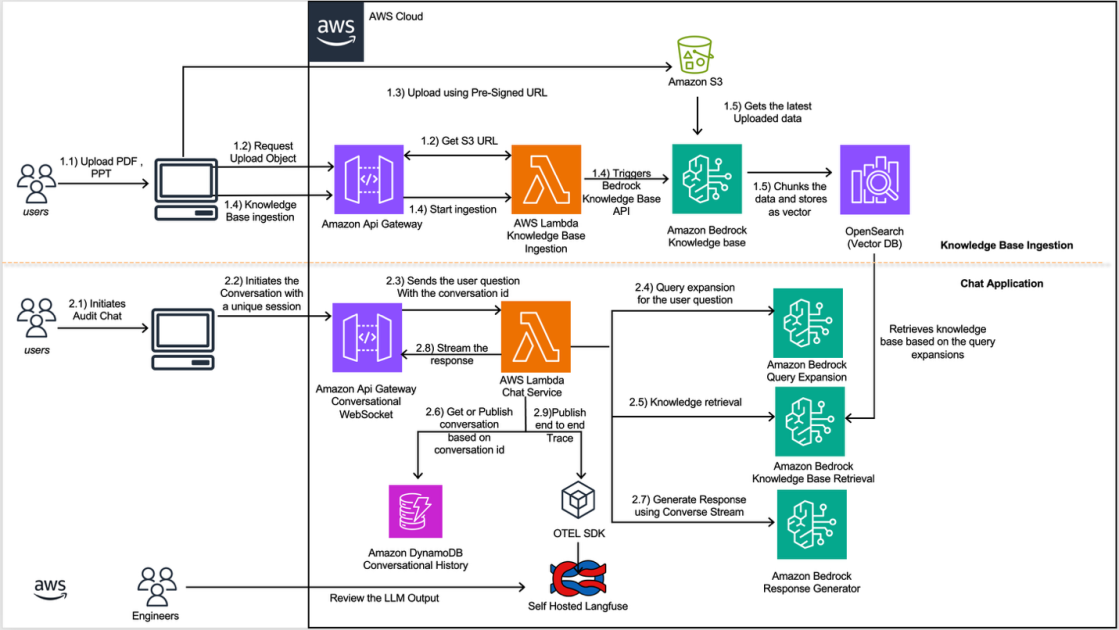
Amazon's approach leverages cutting-edge AI technologies, including Amazon Bedrock and AWS services, to automate the traditionally labor-intensive process of handling regulatory inquiries. The system's backbone is a sophisticated AI application that integrates Retrieval Augmented Generation (RAG) with Amazon Bedrock Knowledge Bases and OpenSearch Serverless. This integration allows for the rapid retrieval and processing of information from thousands of documents, ensuring that responses are accurate and timely.
Moreover, the use of real-time chat interactions powered by Claude Sonnet 4.5 enhances the system's ability to maintain conversational context, a crucial element when dealing with complex, multi-turn regulatory inquiries. This context-awareness is bolstered by Amazon DynamoDB, which manages conversation history and supports seamless interactions.
Nevertheless, the implementation of such advanced AI systems is not without its challenges. The potential for AI to 'hallucinate' information or retrieve outdated guidelines poses significant risks. To mitigate these, Amazon ensures comprehensive observability through OpenTelemetry and Langfuse, enabling continuous monitoring and improvement of the AI system's performance.
The implications for the workforce are profound. While the automation of regulatory inquiries might streamline operations, it also necessitates a shift in the skillsets required by compliance professionals. Roles are likely to evolve, focusing more on overseeing AI processes and maintaining compliance standards rather than manual document processing.
Indeed, as these technologies mature over the next 12-24 months, workers will need to adapt to a landscape where AI plays a central role in compliance functions. This shift could lead to the emergence of new job types centered around AI oversight and ethical compliance management.
As Amazon pioneers this integration of AI into financial compliance, the ripple effects could redefine the sector's employment dynamics. The future promises not just efficiency but a transformed workforce, echoing the very essence of innovation.
Originally reported by aws.amazon.com