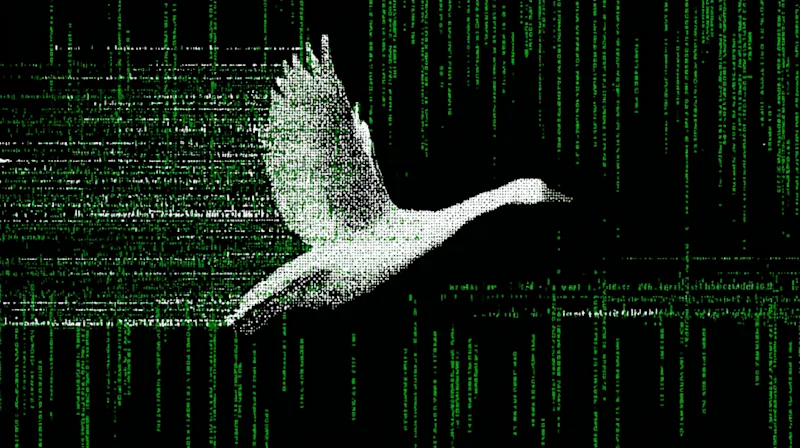
The competitive landscape of AI coding tools is witnessing significant shifts as developers rally around Goose, an open-source alternative to Anthropic's Claude Code, citing cost concerns and usage restrictions.
The implications of this shift are profound for the software development industry, especially concerning employment and accessibility. As developers seek more economically viable solutions, the rise of Goose underscores a growing demand for cost-effective, flexible AI tools that empower programmers without financial strain.
Claude Code by Anthropic, with its pricing ranging from $20 to $200 per month, has become a contentious point among developers. The tool, celebrated for its autonomous coding capabilities, faces criticism for its restrictive rate limits and token-based usage caps. These restrictions, which some developers find confusing and prohibitive, have sparked a backlash, with many turning to forums to express frustration. Meanwhile, Goose, developed by Block, offers a no-cost alternative that operates entirely on local machines, thereby providing users with complete data control and offline functionality.
Moreover, Goose's model-agnostic architecture allows developers to integrate various language models, including those from OpenAI and Google. This flexibility contrasts sharply with Claude Code's server-reliant infrastructure, which necessitates continuous cloud connectivity. As Goose continues to gain traction, boasting over 26,100 stars on GitHub with significant community contributions, it represents a paradigm shift towards democratizing AI access in coding.
The economic implications of such technological democratization are significant. By lowering the barriers to entry, Goose potentially broadens participation in AI-driven development, fostering innovation and potentially leading to new employment opportunities within tech sectors that prioritize open-source solutions. Indeed, the shift could catalyze a reallocation of resources, as developers and tech firms reconsider investment strategies in AI tools.
Looking ahead, the rise of Goose might herald a new era where open-source AI solutions become the norm, influencing how developers engage with technology and collaborate across borders. Such trends could spur the creation of roles centered around open-source development, community management, and AI ethics, reshaping the employment landscape.
The ongoing evolution of AI tools like Claude Code and Goose signifies a dynamic period in tech, where accessibility and affordability are paramount. As developers navigate these changes, the industry must adapt to ensure that technological advancements translate into equitable employment growth.
Originally reported by VentureBeat.