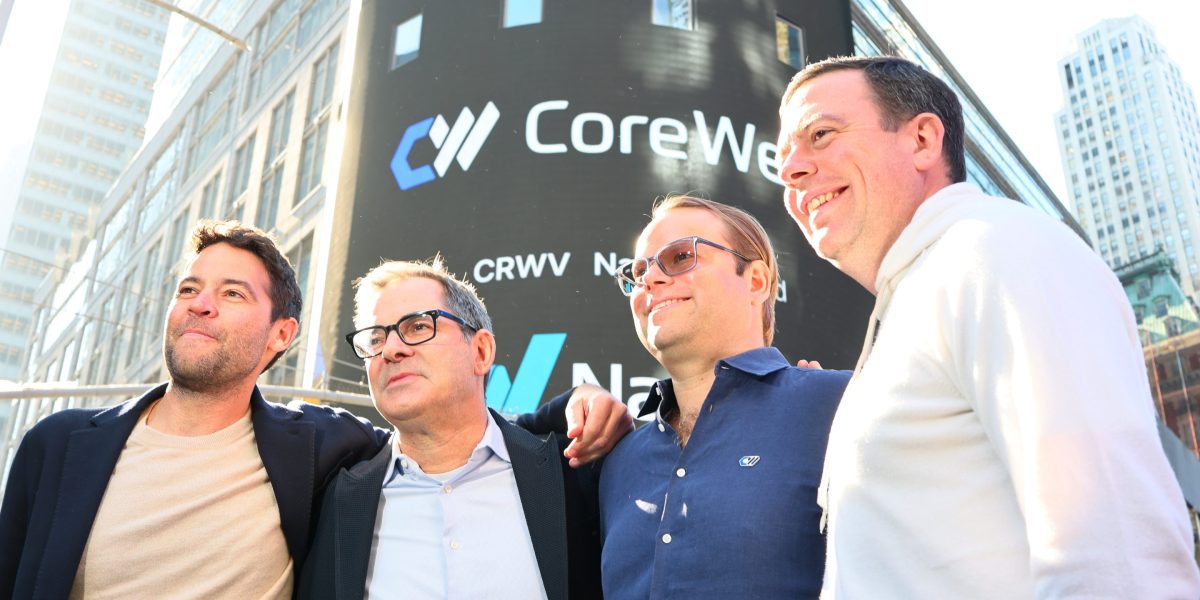
Amidst the fervent excitement surrounding artificial intelligence, CoreWeave stands as a prominent symbol of both the opportunities and the perils that accompany this technological boom. As a leading data-center operator, CoreWeave's financial maneuvers are under intense scrutiny, posing significant implications for employment within the AI infrastructure sector.
The rapid expansion of AI technologies has spurred a corresponding demand for infrastructure capable of supporting complex computational tasks. This demand has precipitated a surge in job creation within the tech sector, particularly in roles related to data-center operations and management. However, the precarious financial health of companies like CoreWeave underscores the volatility of employment in this rapidly evolving industry.
CoreWeave's business model, characterized by substantial debt and aggressive capital expenditure, mirrors the broader narrative of the AI industry's expansion. Indeed, the company has accumulated $11 billion in debt, with current liabilities of $7.6 billion, as it strives to build a comprehensive network of data centers. While this strategy has attracted investor interest, as evidenced by a 160% rise in its stock price, it also raises concerns about sustainability and long-term employment stability.
Moreover, the company's reliance on lease agreements totaling $34 billion over the next decade highlights potential vulnerabilities. Should the AI market face a downturn, or if client startups fail to fulfill their contractual obligations, CoreWeave's financial commitments could lead to significant employment disruptions. This scenario is illustrative of the broader risks faced by workers in the AI sector, where job security can be as volatile as the technologies that drive it.
Nevertheless, CoreWeave's ambitious growth targets, with projected revenues between $5.15 billion and $5.35 billion for 2025, suggest potential for job creation in roles such as software engineering, data analysis, and infrastructure management. The company's trajectory presents a dual narrative: one of innovation and opportunity, counterbalanced by financial uncertainty and potential job displacement.
In the next 12 to 24 months, the outcomes for workers in this sector will be closely tied to CoreWeave's financial performance and the broader AI industry's resilience. Should economic conditions remain favorable, job opportunities may expand, offering new roles and career paths in AI infrastructure. However, a market correction could lead to job losses and require workers to adapt swiftly to changing conditions.
Originally reported by Fortune