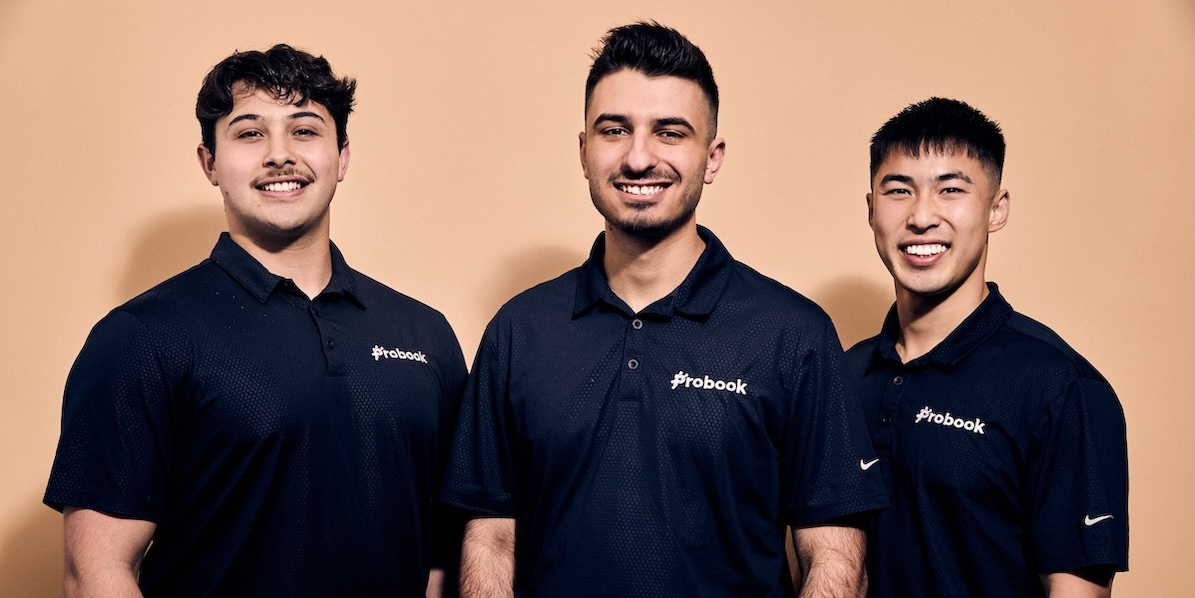
In an era where technology is reshaping the fabric of work, Probook stands out by revolutionizing the trades through its AI Operating System, promising to redefine job roles and enhance operational efficiency.
The integration of AI in home services, as exemplified by Probook, signifies a pivotal shift in how traditional jobs are executed. By automating dispatch and other operational tasks, Probook aims to lift the administrative burdens that have long plagued tradespeople, allowing them to focus on the core aspects of their work. This transformation is particularly significant at a time when many industries are grappling with the dual challenge of maintaining human touch while embracing technological advancement.
Probook's approach is both practical and visionary, drawing from the personal experiences of its founders who have been intimately connected with the challenges faced by tradespeople. George Eliadis, for instance, observed firsthand the logistical hurdles in his father's power washing business. The application of AI to streamline these processes addresses a critical inefficiency in the sector. Moreover, by consolidating disparate tools into a singular, integrated platform, Probook not only enhances operational coherence but also reduces costs, proving beneficial to both businesses and their clients.
Indeed, the economic implications are notable. By improving efficiency, Probook enables tradesmen to expand their service capacity without proportionally increasing their workforce or expenses. This has the potential to boost profitability and job satisfaction, as workers spend less time on menial tasks and more on skilled labor. Furthermore, as the system provides real-time data on technician availability and skill sets, it optimizes resource allocation, thereby ensuring that the right skills are matched to the right jobs.
Nevertheless, the broader employment landscape must grapple with the evolving role of AI in traditionally manual sectors. While automation through AI can lead to job displacement in some areas, it also heralds the emergence of new roles—particularly those that involve managing and maintaining these AI systems. As Probook scales its operations, it is likely to require a new cadre of tech-savvy professionals adept at overseeing AI-driven processes, thus creating a new employment niche.
In the next 12 to 24 months, as Probook continues to refine its platform, tradespeople are expected to benefit from improved job conditions and potentially higher earnings due to increased efficiency and customer satisfaction. However, the transition will necessitate upskilling within the workforce to align with the new technological demands.
As AI becomes an integral part of the trades, Probook's model offers a blueprint for other sectors, illustrating how technology can be harnessed to enhance, rather than replace, human labor. In doing so, it echoes a broader trend towards using AI to augment human capabilities, ensuring that technology and authenticity coexist in harmony.
Originally reported by Sequoia Capital.