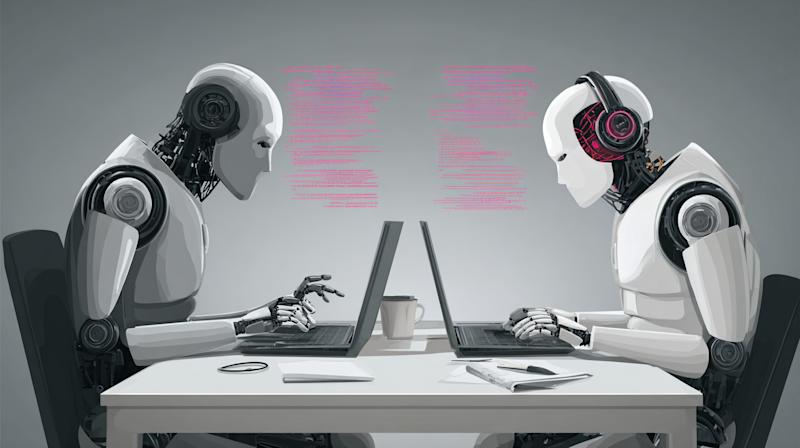
In a move that defies prevailing industry narratives, Egnyte is continuing to hire junior engineers despite the rise of AI coding tools that many believed would lead to reduced headcounts.
This commitment to maintaining and even expanding its human workforce highlights a significant shift in how companies are integrating AI into their operations. As AI tools become more sophisticated, the expectation has been that they will replace human roles, particularly in tech-heavy sectors. However, Egnyte's strategy suggests a more nuanced integration, where AI acts as an enhancer rather than a replacement.
Egnyte has embedded AI coding tools across its team of more than 350 developers, not to cut jobs but to streamline onboarding processes and enhance junior engineers' understanding of complex codebases. These tools help new hires assimilate faster, accelerating their progression from junior to senior roles. Such an approach challenges the 2025 narrative that AI would inevitably lead to job cuts in the tech industry, presenting an alternative where AI augments human capabilities.
Moreover, the company's use of AI for tasks such as code comprehension, smart search, and unit testing demonstrates a strategic application of technology that supports rather than supplants human effort. This integration allows developers to focus on higher-value tasks, with AI handling routine or time-consuming processes. According to the company, this strategy not only increases productivity but also enriches the work experience for their engineers.
Indeed, the broader employment implications are significant. As AI tools continue to develop, their role in the workplace is evolving from a potential threat to an opportunity for professional growth. For instance, junior developers at Egnyte are given hands-on tasks across the full development lifecycle, from requirement analysis to post-deployment maintenance, fostering a comprehensive skill set that positions them for future leadership roles.
The forward-looking perspective suggests that as AI becomes more integrated into business processes, the demand for skilled human oversight will remain robust. Over the next 12 to 24 months, companies adopting similar strategies may find themselves with a competitive edge, as their workforce becomes more agile and capable of leveraging AI to drive innovation.
In conclusion, Egnyte's approach serves as a compelling case study in the transformative potential of AI when used to complement human skills rather than replace them. As the technology landscape continues to evolve, such strategies could redefine workforce dynamics across industries.
Originally reported by VentureBeat.