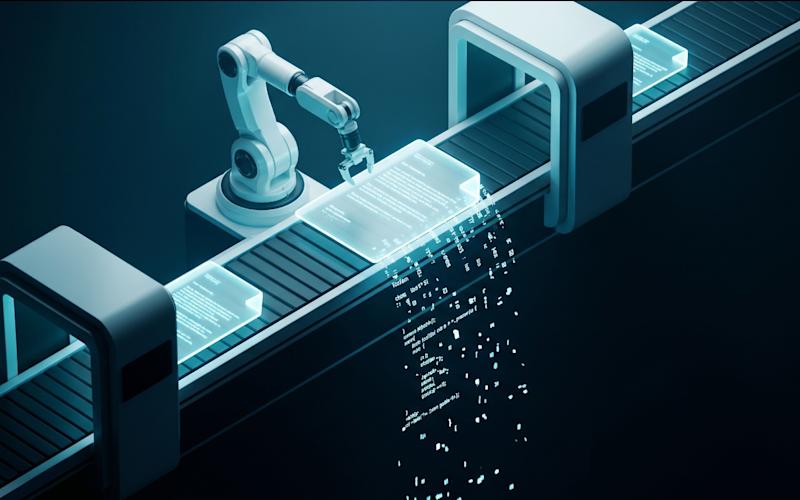
In an age where automation is reshaping the landscape of industry, recent revelations about the shortcomings of frontier AI models are raising important questions about the reliability—and the potential employment implications—of these advanced technologies.
As AI continues to advance, its impact on employment is increasingly evident. The study reported by VentureBeat, which involved prominent tech companies such as Microsoft and others, reveals significant challenges in the current capabilities of AI models. These models, often tasked with autonomously processing and editing documents, were shown to corrupt content in approximately 25% of instances during multi-step workflows. This casts a shadow over the trustworthiness of AI in knowledge-intensive roles, highlighting the ongoing tension between technological advancement and job reliability.
Moreover, the findings underscore the complexities of delegated work—a burgeoning paradigm where AI systems are employed to handle tasks traditionally performed by professionals. The DELEGATE-52 benchmark study, referenced in the original article, used simulations across 52 professional domains to evaluate AI performance without human intervention. The research demonstrated that even with sophisticated models from leading companies like OpenAI and Anthropic, the results were far from perfect, often exacerbated by the inclusion of distractor documents. Such challenges underscore the need for caution in rapidly deploying AI in sectors where precision is paramount.
Indeed, this study serves as a cautionary tale for sectors like financial accounting and software engineering, where AI's role is increasingly seen as supplementary rather than substitutive. The potential for errors in document processing raises critical questions about the balance between efficiency and accuracy, particularly in industries where the latter is non-negotiable. It also suggests a future where human oversight remains essential, potentially transforming existing job roles rather than eliminating them.
Nevertheless, as the technology matures, the pressure to automate will inevitably lead to more nuanced and sophisticated AI systems. In the next 12 to 24 months, we may see a trend where AI acts more as an assistant than an independent worker, enhancing rather than replacing human capabilities. This could lead to new job roles centered around AI management and oversight, providing opportunities for workers to harness technology in ways that augment their existing skills.
In conclusion, while AI models like those from Google, Microsoft, and others hold the promise of efficiency, their limitations remind us of the irreplaceable value of human judgment. As the interplay between AI and employment continues to evolve, the challenge will be to integrate these technologies in ways that support human work rather than undermine it.
Originally reported by VentureBeat.