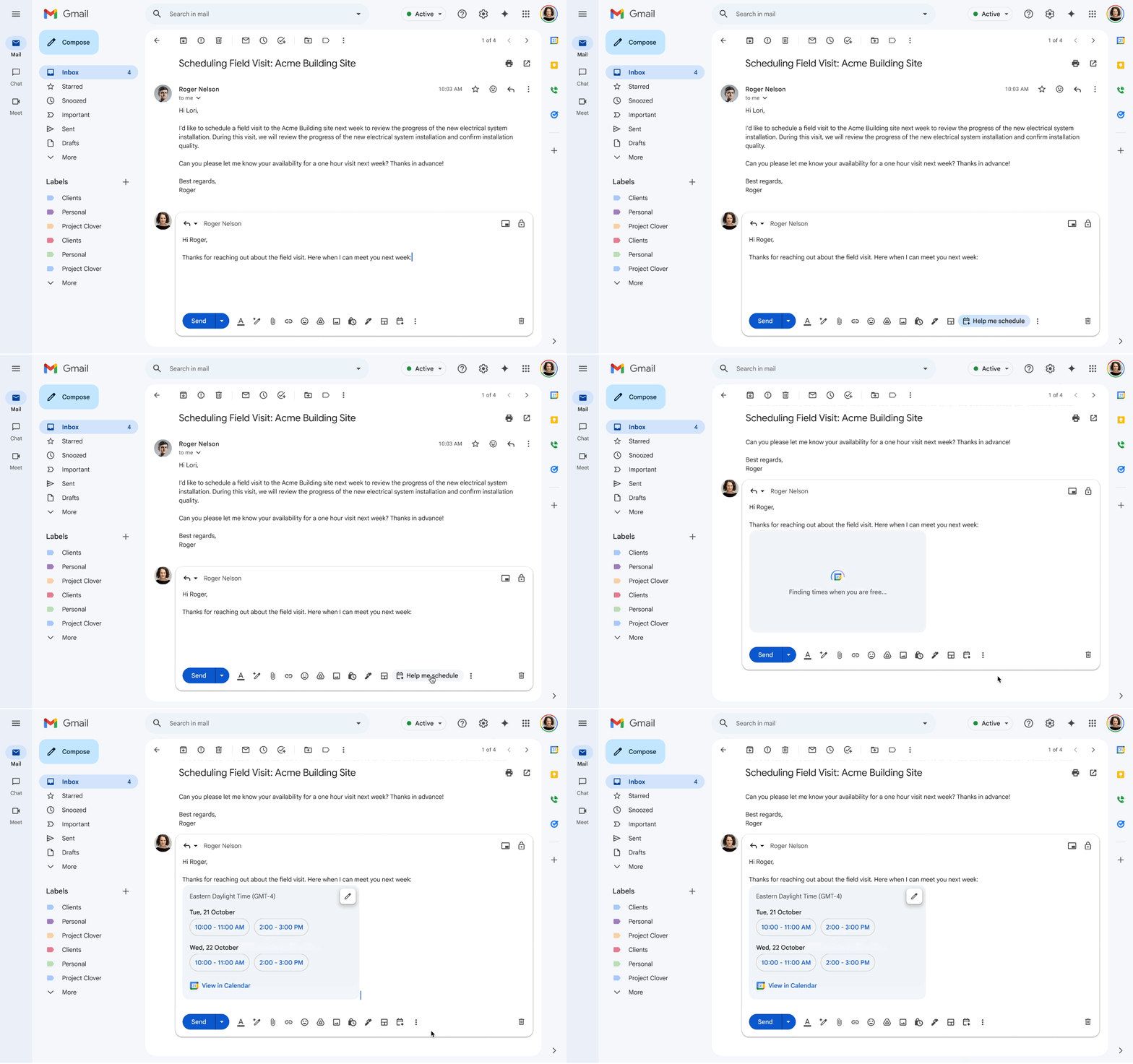
In an era where time is a precious commodity, Google's latest AI innovation, Gemini, promises to streamline one of the most mundane yet crucial tasks in the workplace: scheduling meetings. The introduction of the 'Help Me Schedule' feature in Gmail marks a significant step in automating administrative tasks, potentially transforming the way we manage our calendars.
The implications of this development are profound, particularly in the context of employment. With businesses increasingly relying on technology to enhance productivity, AI tools like Gemini are becoming indispensable. This shift is not merely about convenience; it speaks to a broader trend where AI is integrated into everyday work processes, potentially altering job roles and responsibilities.
Moreover, Google's expansion of AI capabilities across its products underscores the growing influence of automation in various sectors. By leveraging AI to recognize scheduling cues within emails, Gemini offers a glimpse into a future where administrative tasks are seamlessly managed by intelligent systems. This could lead to a redistribution of labor, allowing human workers to focus on more complex, strategic tasks that require critical thinking and creativity.
Nevertheless, the deployment of AI in scheduling is not without its challenges. As noted, some users have reported issues with AI misinterpreting email contexts, resulting in scheduling errors. This highlights a critical need for human oversight, ensuring that AI acts as a complement rather than a replacement for human judgment.
Indeed, the gradual rollout of 'Help Me Schedule' reflects Google's cautious approach to integrating AI into core productivity tools. As more users gain access over the coming months, the feature's impact on workplace efficiency and job roles will become clearer. For now, businesses and individuals with Google AI Pro and AI Ultra subscriptions stand at the forefront of this technological evolution.
Looking ahead, the next 12 to 24 months could see a significant shift in how businesses approach scheduling and administrative tasks. As AI systems become more sophisticated, the demand for roles centered around managing AI tools and interpreting AI-generated data is likely to grow. This evolution will require workers to adapt, acquiring new skills to thrive in an AI-enhanced workplace.
Ultimately, the introduction of AI-driven scheduling tools like Gemini represents a pivotal moment in the workplace. It challenges us to rethink traditional job roles and embrace a future where technology and human ingenuity coexist to drive productivity. Originally reported by Ars Technica