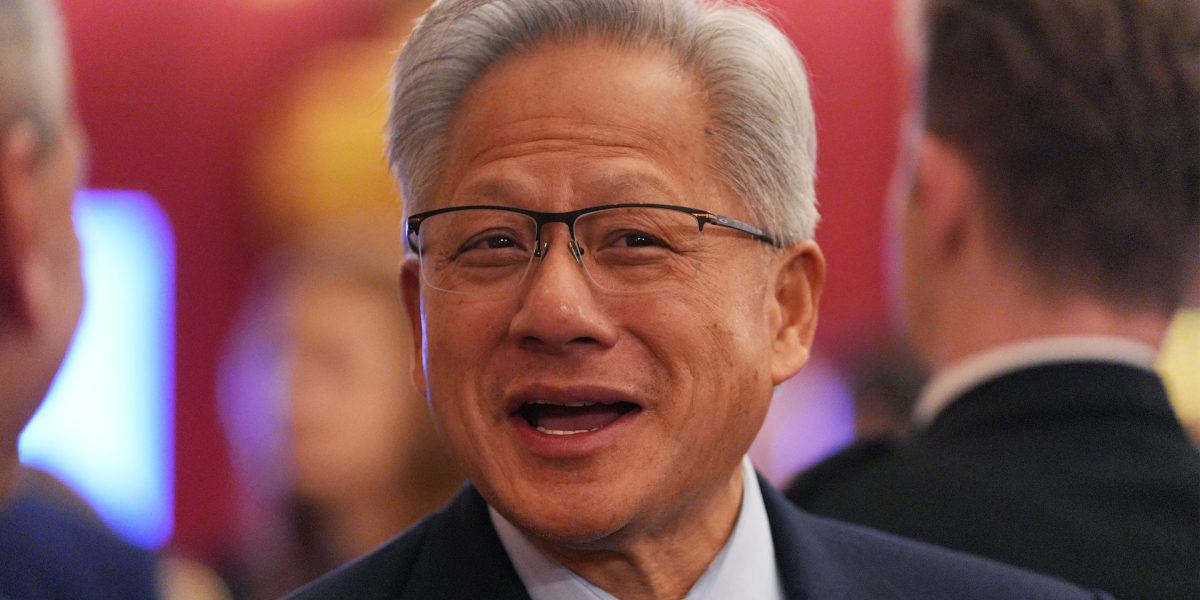
Nvidia’s CEO, Jensen Huang, has ignited an impassioned dialogue on the role of artificial intelligence in modern workplaces, urging employees to embrace AI across all possible tasks. His bold stance underscores a broader trend among tech giants to integrate AI deeply into their operational fabric.
Huang’s remarks at a recent all-hands meeting, following a record-breaking earnings report, highlight a critical juncture for employment in the tech industry. As companies like Nvidia push for widespread AI adoption, the implications for job roles and organizational structures become profound. The drive towards automation raises questions about the future of employment, yet Huang insists that AI will augment rather than replace the workforce.
Moreover, Nvidia is not isolated in this approach. Microsoft has mandated the use of AI tools like GitHub Copilot, while Meta plans to incorporate AI usage into employee evaluations. Google and Amazon are following suit, each integrating AI in ways that redefine employee tasks. These moves suggest a significant shift in how companies view AI’s role in productivity and innovation. Indeed, as AI tools become increasingly sophisticated, they promise to transform roles across various sectors, demanding new skills and altering traditional workflows.
Nevertheless, this transition is not without its skeptics. Concerns about an AI bubble persist, as noted by high-profile investors like Michael Burry, who draw parallels between Nvidia's current trajectory and Cisco during the dotcom era. Yet, Nvidia continues to expand its workforce, hiring several thousand new employees despite these apprehensions. This expansion, coupled with new office openings in Asia and the U.S., signifies confidence in AI’s potential to drive growth rather than contraction.
In the next 12-24 months, workers across industries will likely see AI tools become integral to their daily tasks, necessitating a shift in skill sets. Companies will need to invest in training and development to equip employees for this new landscape. The challenge will be to ensure that AI augments human capabilities rather than displaces them.
Ultimately, Huang’s assertion that AI will not render humans obsolete but rather provide them with more meaningful work echoes a broader optimism. As the global economy grapples with technological disruptions, the message is clear: embracing AI is not just an option but a necessity for future competitiveness.
Originally reported by Fortune.