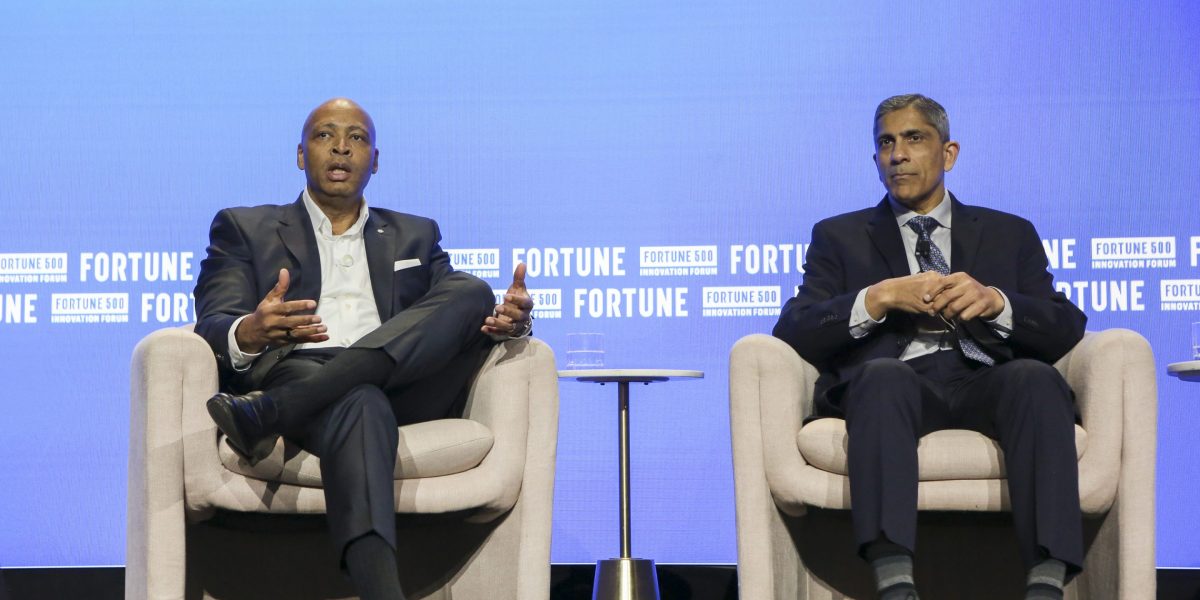
Honeywell Technologies CEO Vimal Kapur and C.H. Robinson CEO Dave Bozeman recently emphasized that artificial intelligence (AI) is set not to replace but to enhance human productivity across industrial sectors. This technological shift, however, demands a significant adaptation from workers worldwide.
The discussion, held at the Fortune 500 Innovation Forum in Detroit, underscores the pressing need for employees to reskill as AI redefines job functions and operational processes. With the rapid evolution of AI, the stakes are high for industries dependent on skilled labor, as companies strive to integrate AI without sacrificing human roles.
In recent years, Honeywell has demonstrated its agility by pivoting towards industrial automation, shedding some of its traditional business lines. Vimal Kapur argues that AI’s potential lies not in replacing the workforce but in supplementing it, particularly in sectors struggling to recruit skilled labor. This nuanced perspective challenges the prevalent narrative focused on AI-powered robotics, like Tesla’s Optimus, which often incites fears of widespread job displacement in manufacturing.
Meanwhile, C.H. Robinson has reported productivity gains exceeding 60% since the end of 2022, thanks to AI-driven automation. The company employs specialized AI agents to streamline its 'order-to-cash' processes, allowing employees to bypass mundane tasks and redirect focus towards complex logistical challenges. This strategic use of AI not only enhances efficiency but also positions C.H. Robinson to better assimilate its recent $5.8 billion acquisition of RXO, promising further operational enhancements.
Nevertheless, the transition to AI-enhanced workflows is not without challenges. Workers express concern over potential job loss, a sentiment Kapur relates to past shifts in technology, such as the introduction of computers in engineering. The key, as both leaders suggest, lies in proactive reskilling initiatives, with Kapur personally engaging in training programs to better understand AI's implications.
Looking ahead, as AI continues to infiltrate various industries, the next 12 to 24 months will likely see a concerted effort from companies to invest in workforce development. This evolution will require not only technological adoption but also a cultural shift in how work is perceived and performed.
In essence, while AI may disrupt traditional employment paradigms, it equally offers an opportunity for industries to redefine roles and enhance productivity. As Kapur pointedly noted, the challenge is not just in adopting new technologies but ensuring that both leaders and workers evolve together.
Originally reported by Fortune.