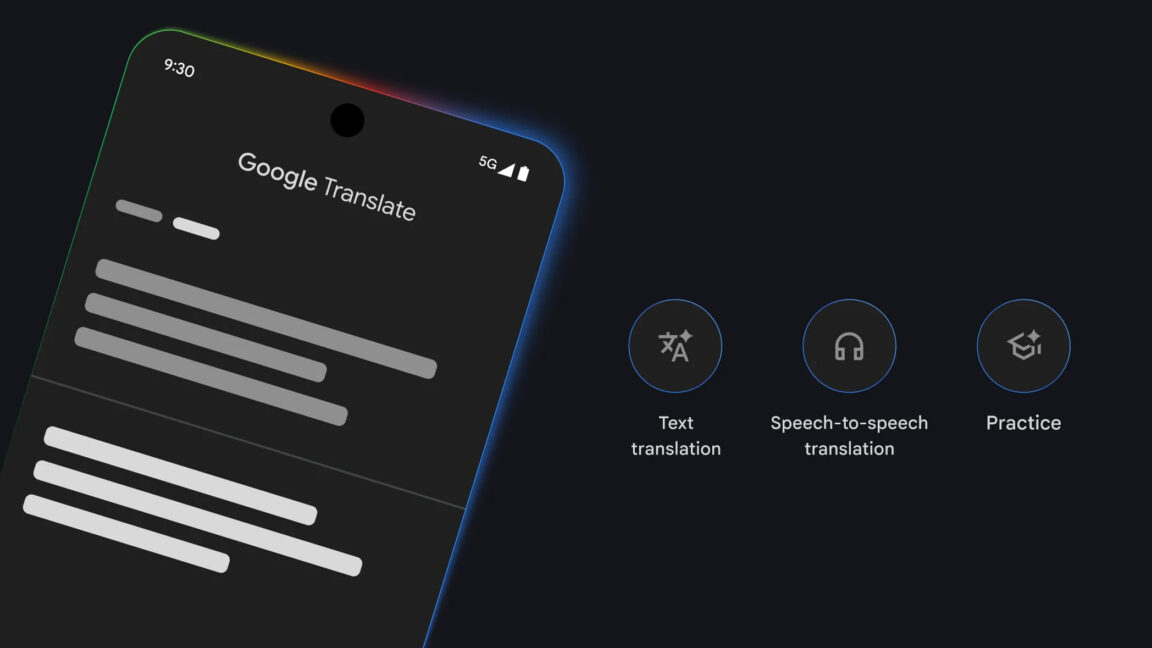
In a world where language has long been a barrier to communication and commerce, Google’s expansion of its live translation capabilities could be a game changer for the global workforce. The company’s Translate app, now powered by the advanced Gemini model, transcends the constraints of proprietary hardware to deliver real-time language translation on any earbuds linked to an Android device.
This evolution in translation technology holds significant implications for employment as it dissolves language barriers that have historically impeded international collaboration and commerce. In an era where remote work and virtual teams are becoming ubiquitous, seamless communication in diverse languages is no longer a luxury but a necessity. Furthermore, the enhancement of translation quality—with an emphasis on idiomatic expressions and local slang—promises to redefine linguistic nuance, allowing non-native speakers to engage in more culturally resonant interactions.
The latest iteration of Google Translate's live translation feature, previously confined to Pixel Buds, now broadens its availability to any compatible earbuds, albeit restricted to Android-enabled devices. As a result, the potential for cross-border teamwork and global remote work opportunities could expand significantly. Simultaneously, the app’s language-learning additions signal an intriguing development for employees seeking to enhance their proficiency in a foreign tongue, as it tailors exercises to the user's proficiency and contextual needs.
Moreover, the integration of Gemini technology within Google Translate equips users to interpret the meaning behind phrases rather than mere word-for-word translations. This transformational approach not only fortifies the translator’s capacity to convey accurate meaning but also sets a precedent for the employment sector, with particular relevance for fields such as international business, customer support, and language education.
Indeed, as AI-driven tools empower workers with language skills that bridge cultural divides, the ramifications for employment are profound. Companies might reconsider hiring practices, placing greater emphasis on multicultural and global competencies, while the demand for roles involving nuanced language skills could diminish as technology fills previously unmet needs.
Looking ahead, the enhancement of AI translation is poised to reshape the nature of employment further. Over the next couple of years, roles that necessitate bilingual capabilities may witness a shift toward more strategic and relational responsibilities as technology does the heavy lifting. Workers may pivot towards roles requiring emotional intelligence and cultural literacy, areas where human insight surpasses machine proficiency.
In conclusion, as AI like Google's Gemini model redefines our linguistic landscape, it is poised to lead a transformation in employment dynamics, catalyzing an interconnected global workforce. While some job roles may evolve in response to such technological advancements, the potential for enriched communication and collaboration presents a promising frontier for human capital.
Originally reported by Ars Technica.