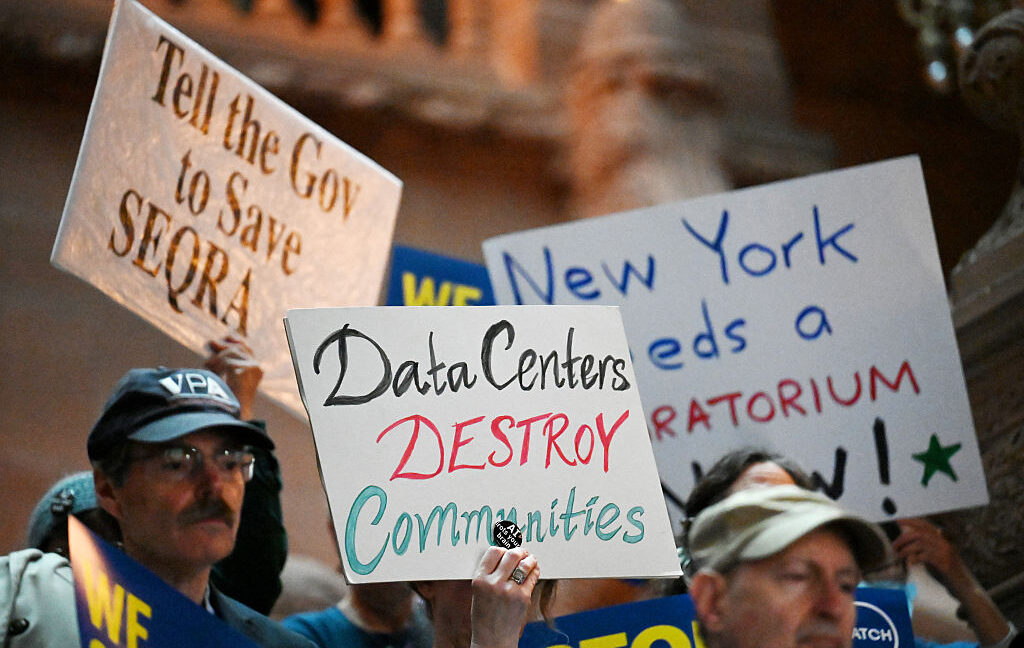
New York's decision to impose a year-long moratorium on data center construction has sent ripples across the AI industry, sparking debates about environmental responsibility and future data infrastructure needs.
The state’s landmark move holds significant implications for employment, as it brings to the forefront the balance between technology advancement and sustainable development. Data centers are crucial for AI operations, and the halt could slow down the growth of tech companies heavily reliant on these facilities. Yet, it also opens up opportunities for sustainable innovation, potentially creating new roles in green technology and infrastructure planning.
Moreover, the moratorium highlights an escalating tension between environmental advocates, who push for tighter regulations to curb pollution and resource consumption, and tech companies eager to expand their computational capacities. This conflict is emblematic of broader societal shifts, where sustainability increasingly intersects with technological progress. Indeed, as the AI industry grapples with these new constraints, there is potential for a significant transformation in how data centers are built and operated.
New York's stance may lead to a surge in demand for professionals skilled in sustainable architecture and environmental science, as companies seek to align with evolving regulations. This could catalyze a broader adoption of renewable energy solutions and innovative cooling technologies, reshaping the labor market landscape in favor of roles that prioritize ecological balance.
Meanwhile, the national conversation around data center regulation intensifies. With federal lawmakers proposing similar measures, albeit facing partisan challenges, the tech industry is prompted to reconsider its strategies. Companies might pivot towards optimizing existing infrastructure or exploring less resource-intensive AI solutions, potentially altering job functions within the sector.
Looking ahead, the next 12 to 24 months could see New York emerging as a leader in setting rigorous standards for data center operations, which could influence national policies. This period may also witness an uptick in job opportunities related to regulatory compliance, environmental impact assessment, and sustainability consulting, as businesses adapt to the new landscape.
In this evolving scenario, the moratorium not only underscores the need for responsible innovation but also signals a transformative phase for the workforce, where ecological mindfulness and technological advancement coexist.
Originally reported by Ars Technica.