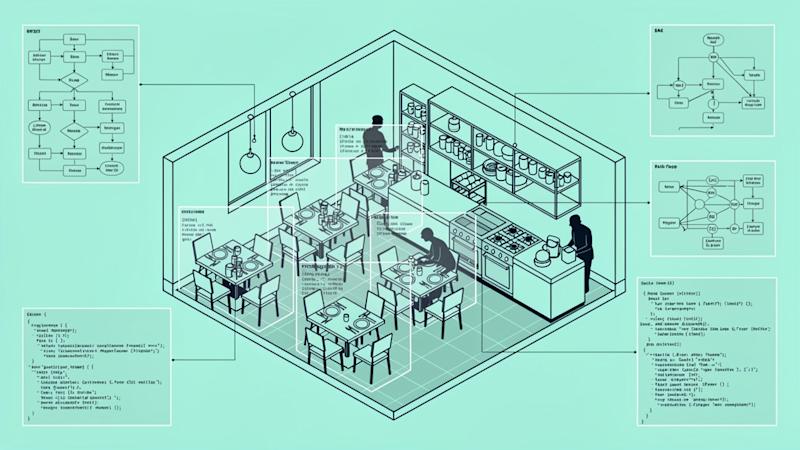
Palona, a startup led by former Google and Meta engineering veterans, is making a significant pivot by launching Palona Vision and Palona Workflow, tailored specifically for the restaurant and hospitality industries. This strategic shift promises to redefine operational efficiency in the sector through AI-driven innovations.
The implications of Palona's new offerings are profound for employment in the restaurant industry. As these technologies automate various operational tasks, they stand to alter job roles significantly, potentially streamlining processes that traditionally required substantial human oversight.
Palona's approach, which integrates AI into the heart of restaurant operations, represents a move away from generic solutions to more tailored, industry-specific applications. This vertical focus allows the company to address unique challenges such as queue management and operational bottlenecks with precision. Moreover, by automating these processes, Palona enables restaurant staff to focus on more value-added tasks, potentially elevating the quality of customer service.
Indeed, the restaurant industry, with its trillion-dollar valuation, is both vast and ripe for technological disruption. Historically, it has been plagued by inefficiencies that AI systems like Palona's can address. The company's decision to shift from a multi-industry approach to a targeted focus on restaurants underscores a broader industry trend towards specialization, which can lead to more effective AI applications.
Nevertheless, this transformation is not without its challenges. As Palona builds on what co-founder Tim Howes calls a "foundation of shifting sand," referring to the rapidly evolving AI landscape, the company must remain agile. This is evident in their use of a patent-pending orchestration layer that allows seamless swapping of AI models, ensuring that their technology remains at the cutting edge.
For workers in the restaurant industry, the next 12 to 24 months may bring significant changes. As AI systems take over routine tasks, employees may need to adapt by acquiring new skills that complement these technologies. This shift could lead to a demand for roles that require a blend of technical and interpersonal skills, as human oversight remains crucial in customer-facing positions.
In conclusion, Palona's targeted AI solutions are set to transform how restaurants operate, potentially enhancing productivity and service quality. As these technologies become more widespread, they will likely redefine job roles within the industry, echoing the broader trend of AI-driven transformation across various sectors.
Originally reported by VentureBeat.