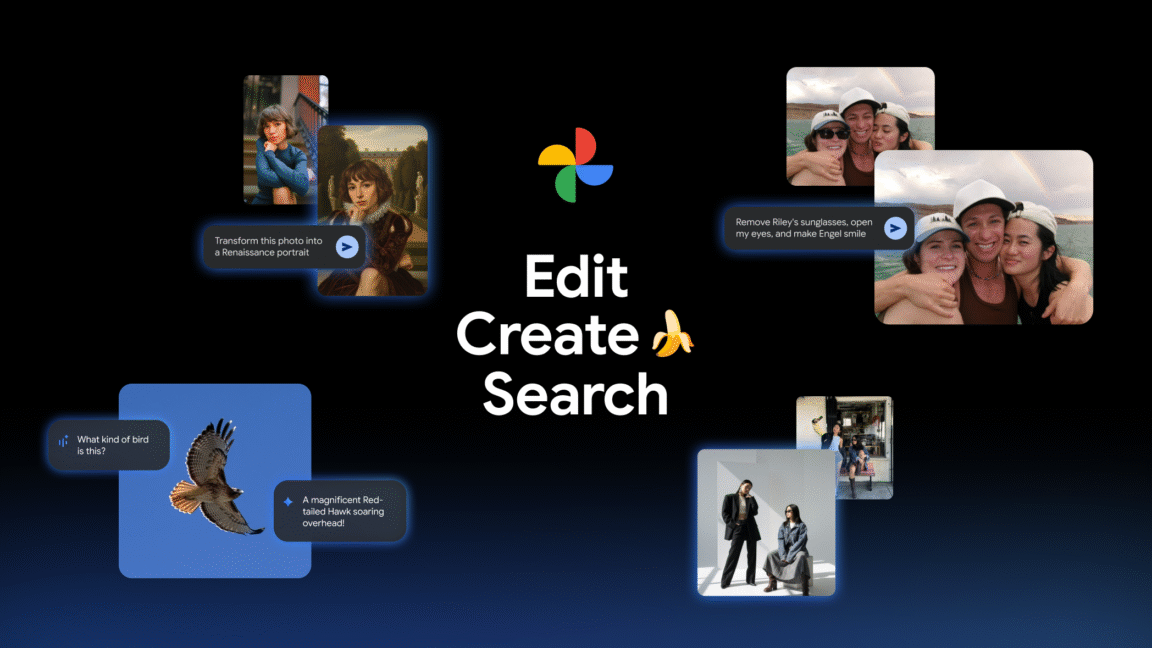
In an era where artificial intelligence (AI) continues to redefine digital landscapes, Google's introduction of its Nano Banana image-editing model into the Photos app marks another bold stride in automation. This development, while enhancing user experience, also sparks a ripple effect across employment sectors, particularly within the creative and tech industries.
The implications for employment are multifaceted. As AI increasingly handles complex image edits with precision, traditional roles in digital photo editing may face transformation. The deployment of Nano Banana, capable of executing intricate editing tasks with minimal human input, underscores the shifting dynamics within creative fields. Indeed, this transformation is not merely confined to technological capabilities but extends to the skillsets demanded of the workforce.
Moreover, Google's initiative highlights the broader trend of AI integration across consumer technology platforms. By embedding sophisticated AI capabilities into widely used applications, the company is not only enhancing service offerings but also setting new benchmarks for user interaction. This shift necessitates a workforce adept at navigating AI-enhanced environments, where understanding and leveraging machine learning tools become crucial to maintaining competitiveness.
However, as AI assumes more routine tasks, there exists an opportunity for new roles to emerge. Positions focused on AI oversight, ethical considerations, and user experience design are likely to gain prominence. The creation of AI templates and the inclusion of a 'Create with AI' section in the app suggest a future where human creativity is augmented rather than supplanted by technology.
Indeed, the advent of features like the 'Ask' button further exemplifies the trajectory towards more intuitive and interactive user experiences, potentially fostering new job categories centered around AI-human interaction design. As these technologies proliferate, the labor market may see a shift in demand towards roles that blend technical proficiency with creative insight.
Looking ahead, the next 12 to 24 months could witness a reconfiguration of job roles within tech and creative industries. As companies like Google continue to innovate, employees may need to adapt by acquiring new skills that align with the capabilities and constraints of AI technologies. The potential for AI to assume routine tasks could liberate human workers to focus on more strategic, creative functions, thereby reshaping the employment landscape.
In conclusion, while Google's AI advancements in the Photos app may appear as a mere enhancement of digital tools, they represent a microcosm of the broader shifts occurring within the employment sector. As AI becomes more entrenched in everyday applications, the workforce must navigate this evolving terrain, balancing technological proficiency with human ingenuity.
Originally reported by Ars Technica.