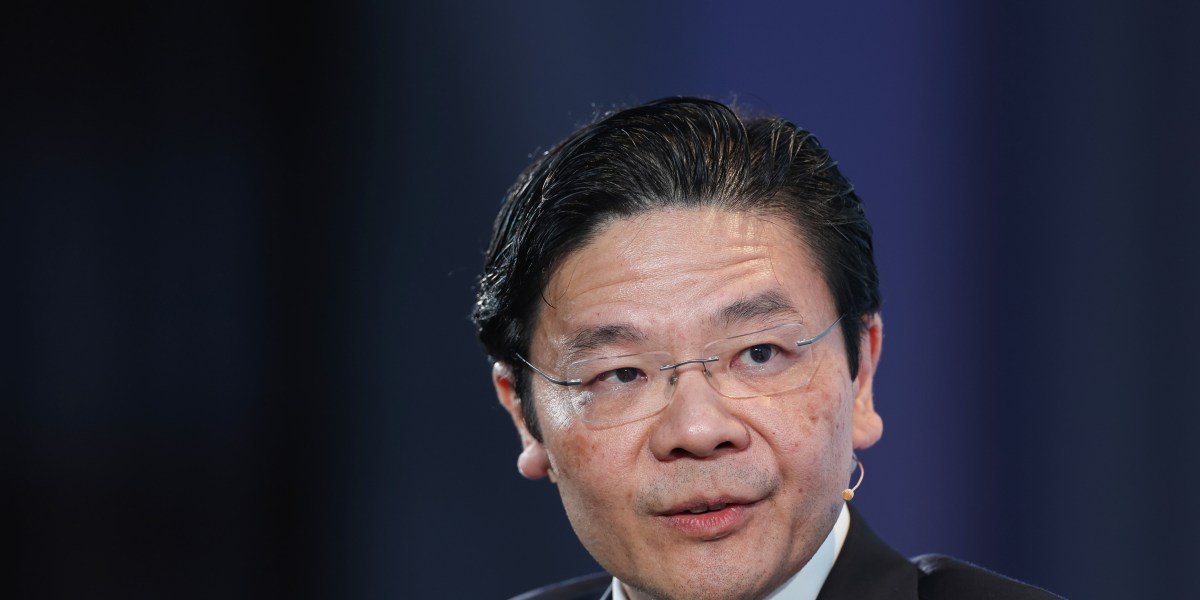
Singapore Prime Minister Lawrence Wong's recent budget address highlighted the nation's commitment to artificial intelligence as a cornerstone of its economic strategy, positioning major companies like DBS and Grab as exemplars. This focus on AI is not merely about technological advancement, but also about securing the nation's economic future amid challenges such as limited natural resources and a tight labor market.
The establishment of a new AI council, to be led by Wong, underscores Singapore's ambition to integrate AI across key sectors including advanced manufacturing, finance, healthcare, and connectivity. This initiative is a strategic move to harness AI as a tool for overcoming structural constraints, supporting an aging population, and enhancing labor productivity. By setting up an AI park in the one-north business district and offering improved tax incentives for AI adoption, the government is laying the groundwork for an AI-driven economy.
DBS, Southeast Asia's largest bank by assets, exemplifies this shift. Under the leadership of CEO Tan Su Shan, the bank has integrated AI into its operations, from customer service enhancements to internal workflow optimizations. Notably, DBS has developed an AI 'co-pilot' to assist customer service officers and launched 'DBS-GPT' for content creation and information summarization. The bank's proactive approach in upskilling employees, with over 11,000 identified for role-specific AI training, reflects its commitment to transforming existing roles and preparing its workforce for an AI-centric future.
Similarly, Grab, a leader in ride-hailing and delivery services, demonstrates AI's transformative potential. The company has utilized AI to streamline operations, such as automating 90% of ride-hailing dispatches. Grab's investment in autonomous vehicles and partnerships with firms like May Mobility and Momenta highlight its dedication to advancing autonomous technology. Moreover, Grab is exploring new job roles to accommodate shifts brought about by AI, including remote safety drivers and data labelers, ensuring that its workforce evolves alongside technological advancements.
Moreover, Singapore's collaboration with over 60 global tech firms, including Google and Microsoft, to establish AI centers of excellence, is a testament to its commitment to becoming a global AI hub. This partnership aims to drive innovation and skill development, thereby catalyzing job creation in emerging AI sectors.
Looking forward, the next 12 to 24 months will be crucial for Singapore's workforce as AI integration continues. Employees may need to adapt to new technologies and roles, requiring ongoing training and flexibility. The government's initiatives suggest a supportive environment for both businesses and workers, aiming to mitigate displacement effects and maximize the benefits of technological advancements.
As Singapore positions itself at the forefront of AI innovation, its strategic focus on AI not only enhances competitiveness but also sets a precedent for other nations. This commitment to AI-driven transformation, with companies like DBS and Grab leading the way, may well define the future of work in the region.
Originally reported by Fortune