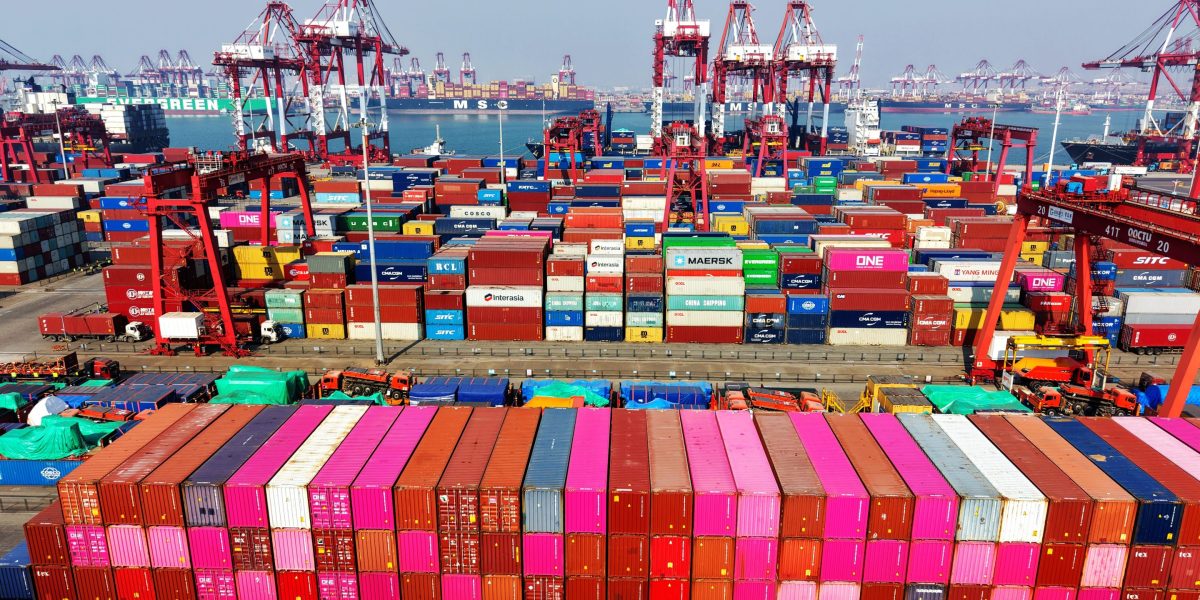
In a world defined by economic turbulence and shifting trade policies, AI stands as a beacon of hope for companies grappling with the complexities of global supply chains. The recent Supreme Court decision to strike down President Donald Trump's "Liberation Day" tariffs has thrust new challenges upon businesses, yet it has also spotlighted the innovative solutions AI can offer.
This development is particularly significant in the context of employment, as AI technologies promise to reshape the logistics and supply chain sectors. The ability of AI to map and optimize global trade routes could lead to more efficient operations, potentially transforming job roles within these industries. As companies like Altana, a New York-based startup, leverage their AI-powered "knowledge graph" to illuminate the intricate web of international trade, they set the stage for a new era where data-driven insights guide business strategies.
Altana’s approach underscores the transformative potential of AI in supply chain management. By aggregating publicly available trade data and integrating it with first-party information from major clients like Maersk and General Motors, Altana offers a continually updated view of global commerce. This capability not only improves operational efficiency but also influences employment dynamics by altering the skills required for supply chain management. As AI adoption accelerates, workers in these sectors may need to develop new competencies in data analysis and digital technologies.
Moreover, the controversy surrounding Chinese AI companies, such as DeepSeek, and their alleged distillation of Anthropic's Claude models, highlights the competitive landscape of AI development. This scenario demonstrates the lengths to which companies will go to optimize their AI models, reflecting the pressure to innovate in a rapidly advancing field. The implications for employment are profound, as the demand for skilled AI engineers and data scientists continues to grow, offering new opportunities in an evolving job market.
Nevertheless, the reliance on AI technology also raises questions about the ethical use of data and compliance with international regulations. The reported use of Nvidia’s Blackwell AI GPUs by Chinese firms, potentially in violation of U.S. export controls, exemplifies the geopolitical tensions intertwined with technological advancements. These developments further emphasize the need for a workforce capable of navigating not only technical challenges but also regulatory landscapes.
Looking ahead, the next 12 to 24 months will likely see a continued integration of AI into supply chain management, with significant implications for employment. As AI tools become more sophisticated, they will not only enhance productivity but also necessitate a reevaluation of workforce skills and roles. Companies may increasingly seek employees who can bridge the gap between traditional logistics and cutting-edge AI technologies.
As AI continues to redefine industries and reshape employment paradigms, the ability to adapt will be crucial. The interplay between technological innovation and workforce transformation presents both challenges and opportunities, ultimately requiring a strategic approach to workforce development in a rapidly changing economic environment.
Originally reported by FORTUNE ON