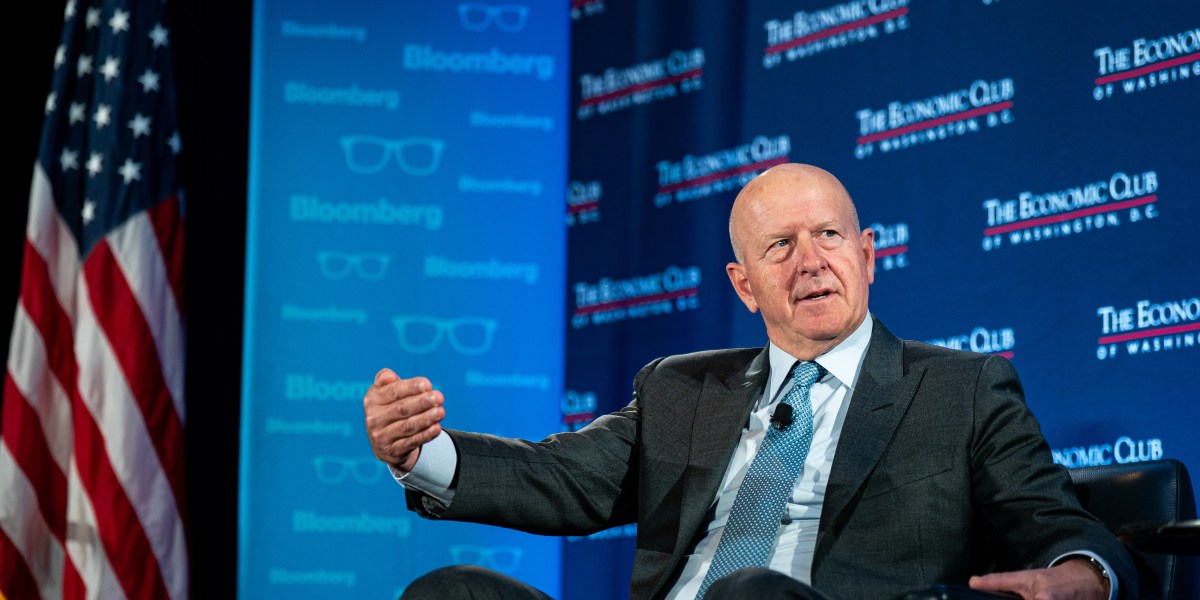
David Solomon, the CEO of Goldman Sachs, recently emphasized the transformative potential of artificial intelligence (AI) during an event at the Economic Club of Washington, D.C. While acknowledging the substantial opportunities AI presents, he cautioned that this technological shift will create both winners and losers in the corporate world.
The timing of Solomon's remarks is crucial as industries across the globe grapple with integrating AI into their operations. As companies invest heavily in AI infrastructure—projected at a combined $350 billion by a few major firms this year alone—there is anticipation of significant productivity gains. This investment surge is not just a technological milestone but a pivotal economic driver that could reshape employment landscapes.
Indeed, the integration of AI into business processes is set to redefine existing job roles, demanding new skills and competencies from the workforce. For instance, as AI optimizes operations, roles in data analysis and machine learning are becoming increasingly critical. These changes, while creating new opportunities, may simultaneously render some traditional roles obsolete.
Moreover, Solomon highlighted the broader economic implications of AI's rapid deployment, noting that it could spur growth, thereby providing a counterbalance to rising public debt. He underscored that the path to economic stability hinges more on growth driven by technological advancements than on revenue increases alone.
Nevertheless, while AI promises to augment productivity, the path is fraught with challenges. Historical parallels to past technological booms, such as the dot-com bubble, serve as a reminder that not all investments will yield returns. Solomon's reference to Alan Greenspan's comments on "irrational exuberance" underscores the volatility that can accompany technological enthusiasm.
For workers, the next 12 to 24 months will be crucial as industries adjust to these changes. As AI becomes more embedded in business operations, employees will need to adapt by upskilling. Companies may need to invest in training programs to equip their workforce with the necessary tools to thrive in this AI-driven environment.
In conclusion, the narrative of AI's potential is compelling, yet it demands a nuanced understanding of its implications for the workforce. As we navigate this transformative period, the challenge will be to harness AI's potential while ensuring an equitable distribution of its benefits.
Originally reported by Fortune