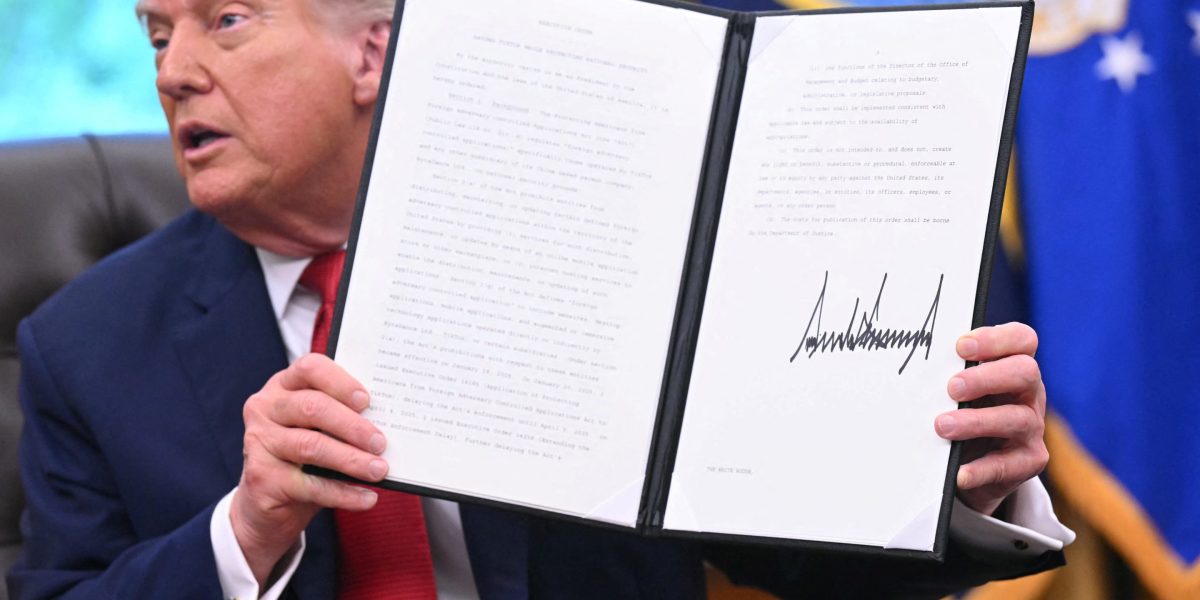
In a significant geopolitical maneuver, President Donald Trump has signed an executive order that effectively places TikTok's algorithm under American control, a move with profound implications for the tech industry and digital employment landscape.
This development is particularly consequential for employment in the tech sector, as it underscores the increasing intersection of technology and national security, a domain that influences job creation and transformation. By involving Oracle—a company with vast data storage capabilities—and media magnate Rupert Murdoch, the deal could reshape employment dynamics within these industries.
Oracle's involvement positions it at the heart of this digital transformation, leveraging its existing infrastructure to manage TikTok's U.S.-based data. This not only ensures data sovereignty but potentially creates new job opportunities in data management and cybersecurity, sectors known for their robust growth. Meanwhile, Murdoch's investment signifies a strategic shift towards digital media, potentially revitalizing traditional media jobs through a digital-first approach.
Moreover, the ownership transition illustrates a broader trend of consolidation within the tech industry, where established companies acquire emerging platforms to expand their digital footprint. This can lead to both job displacement in redundant roles and the emergence of new positions tailored to integrate and innovate around TikTok's algorithm.
Indeed, Vice President JD Vance highlighted the strategic importance of controlling the algorithm, emphasizing that it puts American interests at the forefront of content moderation decisions. As more companies prioritize algorithmic control, roles in AI ethics and regulatory compliance may see heightened demand, reflecting a shift in workforce requirements.
Nevertheless, questions remain about the broader implications for political discourse, given the app's influence on public opinion. The potential for algorithmic bias in content delivery raises ethical considerations, demanding a workforce adept in balancing business interests with ethical content curation.
Looking forward, this development is poised to influence employment in the tech sector over the next 12-24 months, as companies realign their strategies to accommodate new regulatory landscapes and competitive pressures. Workers in tech and media will need to adapt to these changes, developing new skills in data management, digital strategy, and ethical AI.
As the U.S. assumes control over a platform as influential as TikTok, the ripple effects on employment are likely to be profound, echoing the initial impact of the internet on the global job market.
Originally reported by Fortune