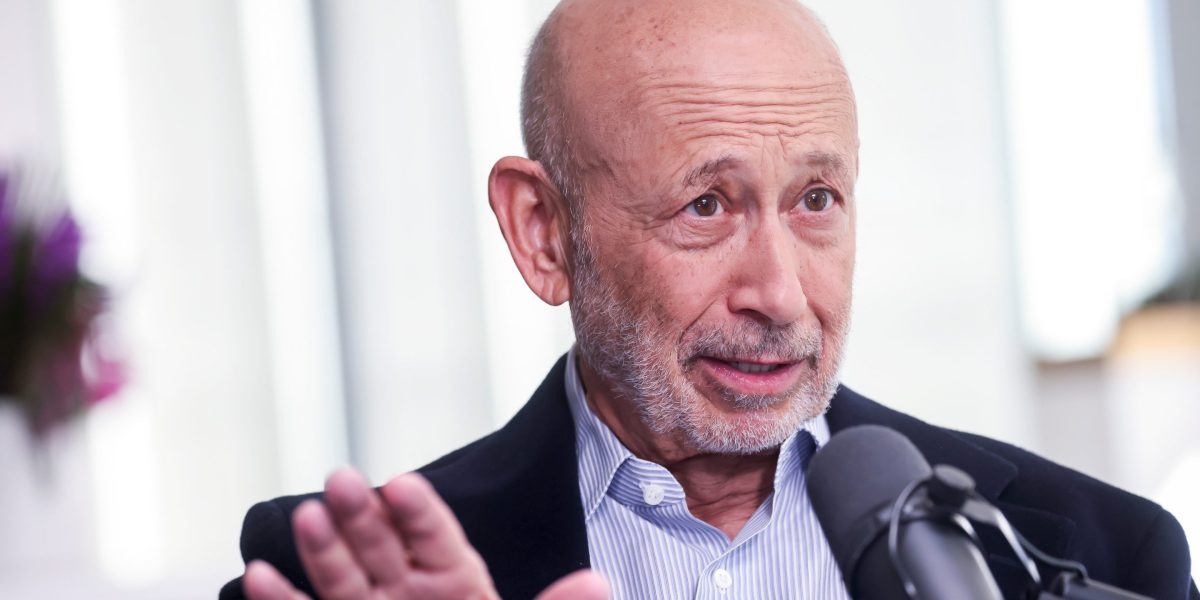
Lloyd Blankfein, the astute former CEO of Goldman Sachs, recently articulated a concern that reverberates across Wall Street: the unchecked speed of AI agents may pose a more tangible threat than the specter of superintelligence. This warning is not merely academic; it underscores a tangible anxiety over the role of AI in the financial sector's workforce.
In an era where financial institutions are integrating AI at an unprecedented pace, Blankfein's insights highlight a critical tension. While AI promises efficiency and cost savings, the potential for errors in machine-driven transactions could lead to catastrophic losses, reminiscent of the 2010 'flash crash.' As firms race to exploit AI's capabilities, the need for robust oversight mechanisms becomes ever more pressing.
Indeed, the financial industry's reliance on AI is both a boon and a burden. The Deloitte analysis of the MIT AI Risk Database underscores this, identifying over 350 distinct risks linked to autonomous behavior in banking. These risks are not merely theoretical; they manifest in real-world scenarios where a single error can cascade through interconnected systems, potentially jeopardizing jobs and financial stability.
Moreover, the American Bankers Association's warning of a potential '737 Max moment' illustrates the precarious balance between automation and human oversight. As automation accelerates, the demand for human oversight remains critical, as evidenced by a mere 14% of CFOs expressing complete trust in AI for accurate accounting per a Wakefield Research study. The majority, 97%, acknowledge the necessity of human intervention to ensure data accuracy.
The implications for employment are profound. As AI systems assume more decision-making roles, the traditional roles of traders, compliance officers, and back-office staff are being redefined. While some positions may become redundant, others will evolve, requiring workers to develop new skills to oversee and manage AI systems effectively.
As financial firms navigate these transformations, they must balance the lure of rapid automation with the imperative of human oversight. Over the next 12 to 24 months, this balance will determine employment trajectories within the sector, influencing how workers adapt to the evolving landscape.
In closing, Blankfein's cautionary insights serve as a reminder that while AI offers remarkable capabilities, its integration into critical systems must be approached with careful consideration. The human element remains indispensable, ensuring that technology serves as a tool, not a takeover.
Originally reported by Fortune