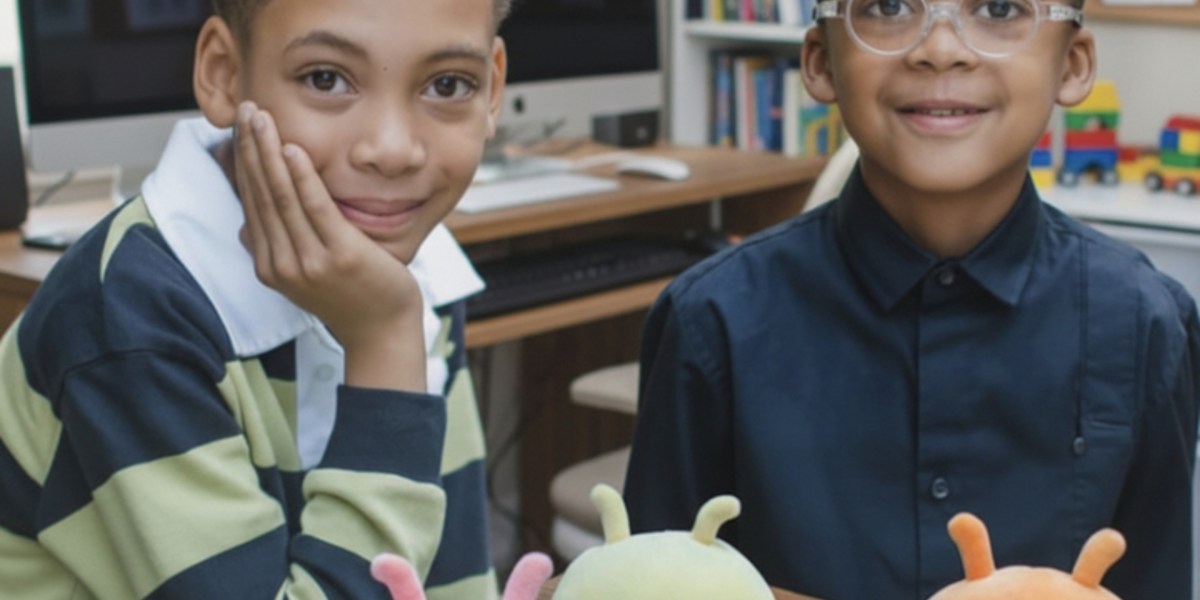
In a novel fusion of childhood creativity and advanced technology, Jackson and Quincy Fuller, ages ten and seven, have embarked on an entrepreneurial journey with their company, Stuffers. By employing AI tools, these young founders are reshaping the corporate swag industry with unique stuffed animals inspired by company logos and mascots.
This innovative approach holds significant implications for employment, particularly in creative and design sectors. As AI continues to permeate various industries, the ability to blend human ingenuity with machine intelligence is becoming increasingly valuable. The Fullers' use of OpenAI’s real-time voice API and image generation models exemplifies how AI can empower even the youngest entrepreneurs to transform ideas into tangible products.
Moreover, the impact of AI on employment extends beyond the immediate novelty of Stuffers’ products. As companies recognize the potential of AI-driven creativity, new roles in design and product development are likely to emerge. These roles could blend traditional artistic skills with technical proficiency, reflecting a broader trend across industries where AI augments human capabilities rather than replacing them entirely.
Indeed, the Fullers' venture serves as a microcosm of larger shifts within the labor market. By leveraging AI, they illustrate how the future of work may increasingly involve collaboration between humans and machines. This paradigm shift necessitates a reevaluation of educational priorities, emphasizing skills that are complementary to AI, such as creativity, critical thinking, and emotional intelligence.
The economic implications are substantial. As industries integrate AI into their operations, they may experience increased efficiency and innovation, potentially leading to job creation in sectors that harness these technologies. The Fullers’ success could inspire other companies to adopt similar approaches, further expanding the market for AI-enhanced products.
Looking ahead, the next 12 to 24 months could see a proliferation of similar ventures, driven by both technological advances and a growing appreciation for AI's role in creative processes. As the workforce adapts, employees who can navigate this hybrid landscape will be in high demand, marking a significant shift in employment dynamics.
In conclusion, the story of Stuffers not only highlights the entrepreneurial spirit of its young founders but also signals a broader transformation in how AI can create new employment opportunities. As AI continues to evolve, its integration into traditional industries promises to redefine the nature of work itself, offering both challenges and opportunities for the workforce.
Originally reported by Fortune