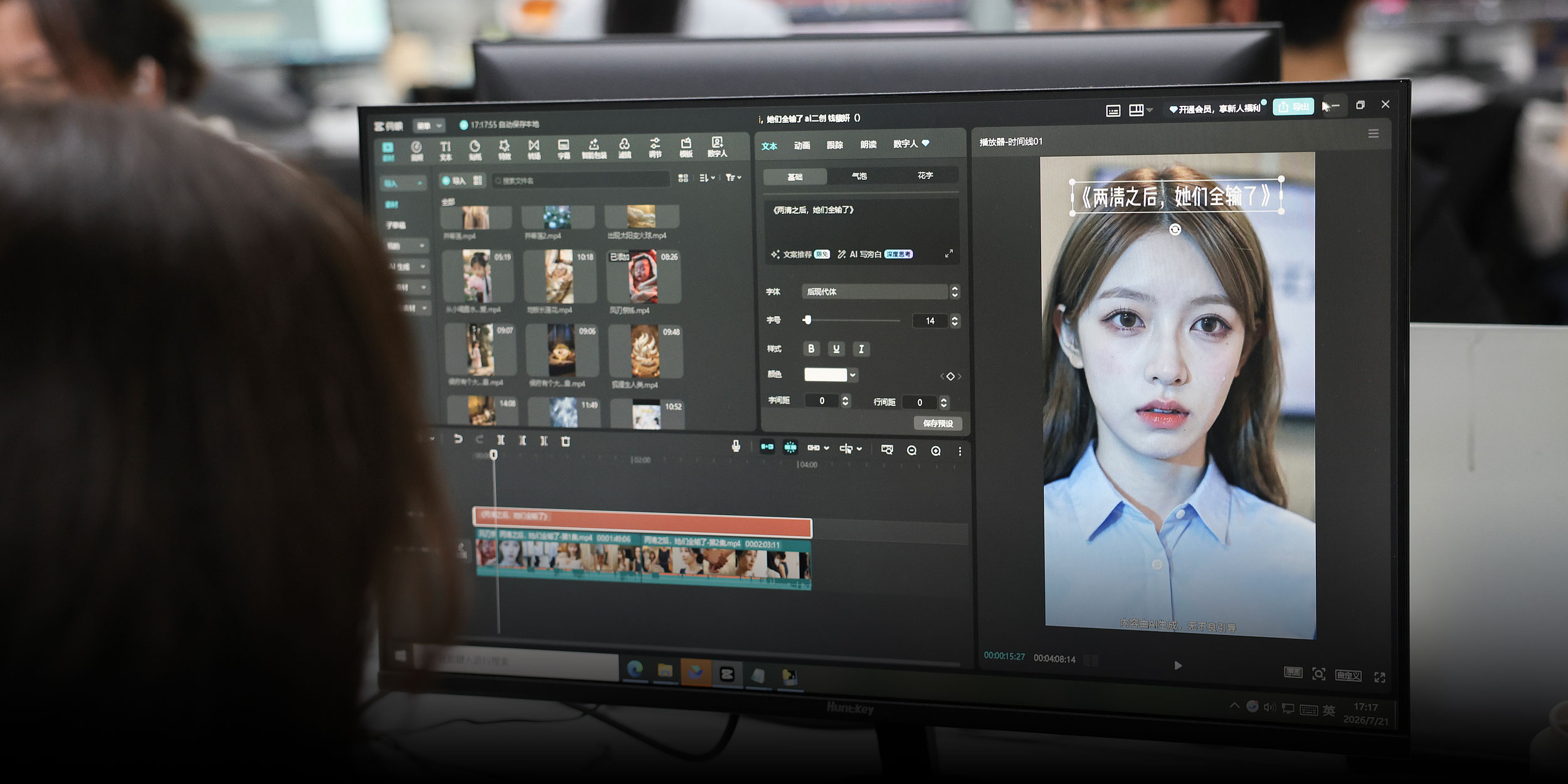
China's burgeoning short-drama industry is experiencing a seismic shift as artificial intelligence (AI) reshapes its workforce. The integration of AI has not only expedited production cycles but also expanded employment opportunities in the sector, drawing talent from diverse fields.
The significance of this transformation cannot be overstated. As AI-driven tools permeate the film industry, they redefine what it means to be a creative professional. This trend underscores a broader narrative: AI is not merely automating tasks, but rather serving as a catalyst for new job creation and skill diversification.
AI's impact on the short-drama sector is profound. The state broadcaster CCTV reported a striking 179% year-over-year increase in recruitment for AI video editors as of June. This hiring surge is indicative of a broader demand for hybrid roles that blend creative and technical skills. Workers trained in domains as varied as artifact restoration and landscape design are now contributing to AI-driven film production, illustrating the cross-disciplinary nature of modern employment trends.
Moreover, cultural communications companies in regions like Zhengzhou are scaling up their output of AI-generated content. Monthly productions have surged from a mere handful to nearly 100 episodes, a testament to AI's ability to streamline processes. This evolution has prompted a demand for specialized roles such as 'card pullers,' who are responsible for script and footage generation, further exemplifying the transformative power of AI in traditional industries.
Indeed, AI is revolutionizing production timelines. Projects that once necessitated large teams and extended timeframes can now be completed by smaller crews in a fraction of the time. CCTV highlighted that some episodes' production cycles have been compressed from months to days, with post-production tasks becoming exponentially faster.
Director He Ziqiang, a proponent of AI in filmmaking, has embraced this technological shift, incorporating AI storyboard artists and image generators into his team. He noted that this democratization of filmmaking allows anyone with a creative vision to produce content, potentially unlocking a wealth of artistic talent across the nation.
Looking ahead, the implications for the workforce are significant. Over the next 12 to 24 months, the film industry's employment landscape will likely continue to evolve, with AI creating new job categories and reshaping existing ones. As AI technology matures, workers may find opportunities in roles that require a fusion of creativity and technical acumen, reflecting broader trends in the digital economy.
In conclusion, China's short-drama boom, powered by AI, represents a microcosm of the global shift towards digitization and automation. As the industry grows, it will serve as a bellwether for how AI can stimulate job creation and redefine professional landscapes.
Originally reported by Sixth Tone.