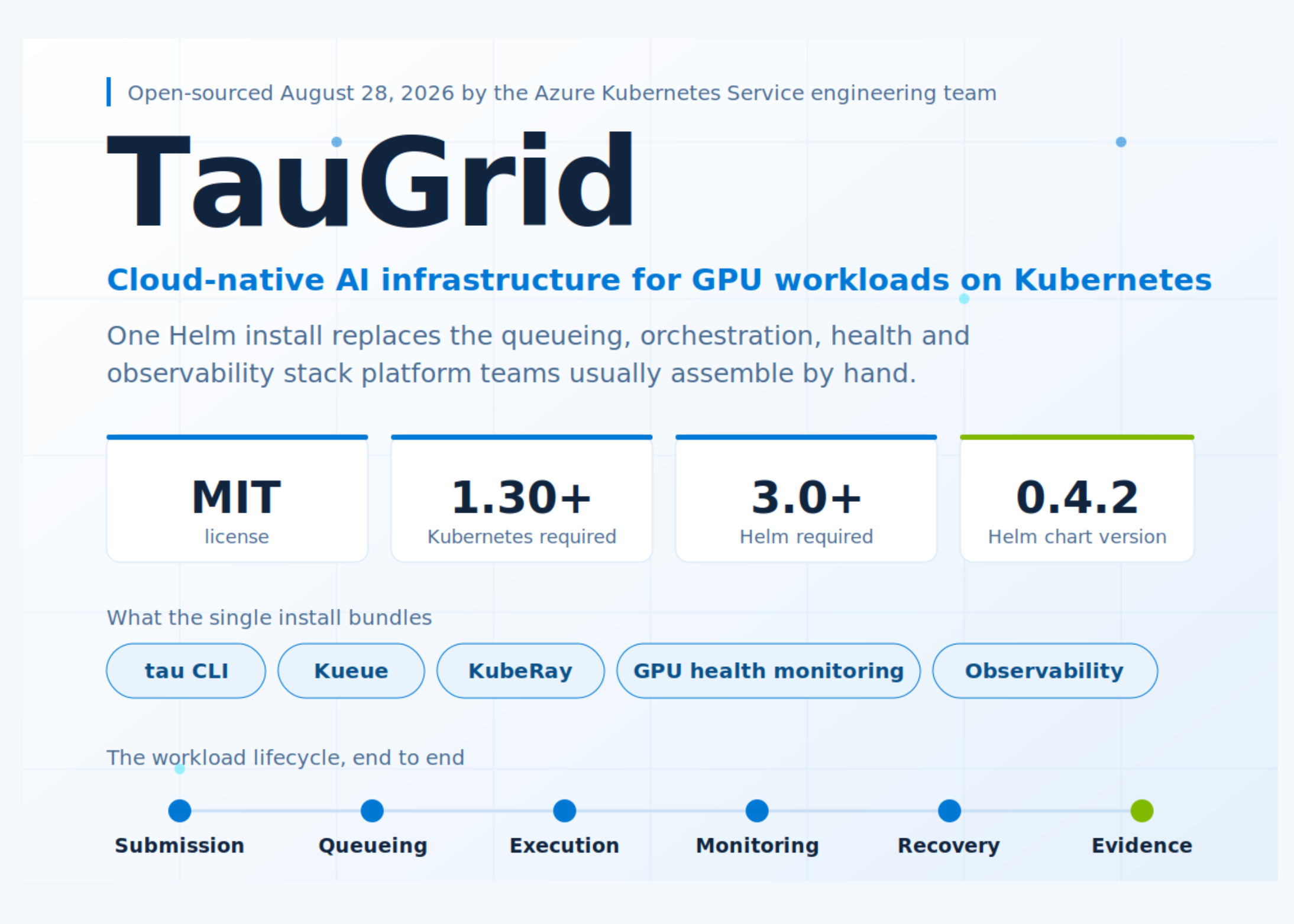
In a significant move poised to reshape the landscape of AI deployment, Microsoft has open-sourced TauGrid, a Kubernetes-native stack designed to streamline GPU workloads. This development could redefine how platform teams manage and execute AI tasks, potentially impacting employment dynamics within the tech industry.
The release of TauGrid is particularly timely as companies increasingly rely on AI to drive efficiency and innovation. As firms adopt new technologies, the roles of IT professionals and data scientists are evolving, demanding new skills and approaches to workload management. With TauGrid, the integration of various components into a single Helm install could reduce the complexity and manual integration traditionally required, thereby altering the job responsibilities of those managing AI infrastructures.
TauGrid combines several critical elements of AI workload management into one coherent package, including the tau CLI, workload queueing through Kueue, Ray cluster orchestration via KubeRay, and GPU health monitoring. This integration can simplify the operational overhead for platform teams, which traditionally involves piecing together disparate tools and scripts. The implications for employment are multifaceted. On one hand, this could streamline operations and reduce the need for certain manual tasks, potentially displacing roles focused on these activities. On the other hand, it could also free up technical talent to focus on more strategic initiatives, enhancing productivity and innovation.
Moreover, the open-source nature of TauGrid under the MIT license signals a democratization of AI infrastructure capabilities. By providing these tools freely, Microsoft enables smaller enterprises and independent developers to leverage sophisticated AI infrastructure without hefty costs. This democratization may lead to a broader distribution of AI-related job opportunities beyond traditional tech hubs.
Nevertheless, the shift towards more automated and integrated AI workflows necessitates a reevaluation of skills within the workforce. As the platform automates previously manual processes, the demand for skills in Kubernetes management, AI workload orchestration, and cloud-based operations is likely to increase. Professionals in this space may need to upskill or reskill to remain competitive, as the focus shifts from routine management to strategic oversight and optimization of AI resources.
Looking forward, the adoption of TauGrid and similar platforms is expected to accelerate over the next 12 to 24 months, particularly as organizations strive to maximize AI's potential while managing cost and complexity. For workers, this means preparing for a landscape where technical proficiency in AI infrastructure and strategic thinking are equally valued.
As the AI ecosystem continues to evolve, tools like TauGrid will play a crucial role in shaping the future of work. By reducing complexity and enabling broader access to advanced AI capabilities, they offer both challenges and opportunities for the workforce. Those who adapt will find themselves at the forefront of a rapidly changing industry.
Originally reported by Marktechpost AI Media