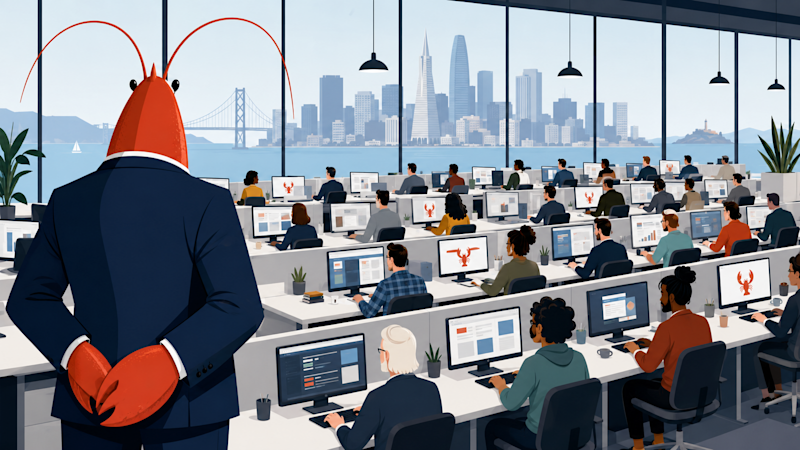
The release of OpenClaw 2.0 marks a pivotal moment in AI-driven enterprise software, poised to redefine collaborative coding in the business environment.
As enterprises increasingly integrate AI technologies, tools like OpenClaw 2.0 are becoming essential for streamlining workflows and enhancing productivity. This evolution is critical now as companies strive to leverage AI for competitive advantage, aiming to boost efficiency and enable more seamless teamwork across dispersed teams.
This significant update to OpenClaw introduces a more robust browser interface, enabling enterprises to transition from individual coding environments to shared, collaborative platforms. By incorporating multi-user collaboration and enhanced security features such as role-based permissions and sandboxing, OpenClaw 2.0 addresses longstanding concerns about data integrity and system vulnerabilities. Indeed, by providing a shared cloud session and persistent workspaces, OpenClaw transforms the AI agent from a solitary tool to a central component of corporate infrastructure.
Moreover, the shift from a developer-centric interface to a more accessible, conversation-based UI lowers barriers for broader enterprise adoption. As employees become more accustomed to AI products like OpenAI's ChatGPT, the familiar interface encourages wider usage across departments, extending beyond engineering to operations, marketing, and beyond. This democratization of AI tools within a corporate setting allows for more dynamic and efficient use of AI-enhanced capabilities.
Nevertheless, challenges remain. While OpenClaw 2.0 offers advanced functionality, its success hinges on its ability to seamlessly integrate with existing systems and the willingness of companies to invest in training and transition. Economic theories of adoption suggest that technological shifts in the labor market often require initial disruption followed by stabilization, as firms strategically realign resources to optimize new systems.
In the coming 12 to 24 months, as enterprises implement OpenClaw 2.0, workers may witness their roles evolving. There will likely be an increased emphasis on collaborative skills and a deeper understanding of AI-driven processes. Those who adapt quickly may find new opportunities in managing these AI environments, whereas others may need to upskill to stay relevant.
The release of OpenClaw 2.0 thus represents not just an advancement in technology, but a transformative shift in how work is conducted across industries. This evolution promises to make enterprise environments more agile and responsive, potentially heralding a new era of productivity.
Originally reported by VentureBeat.